Form Follows Function in the Ulysse Nardin Super Freak




There’s a wonderful beauty in complexity. And this is not something a lot of people understand, especially in a modern world, which in many ways leans more toward minimalism than intricacy. The appreciation of the complexity of beauty requires thought and introspection, especially from those who want to create and execute it.
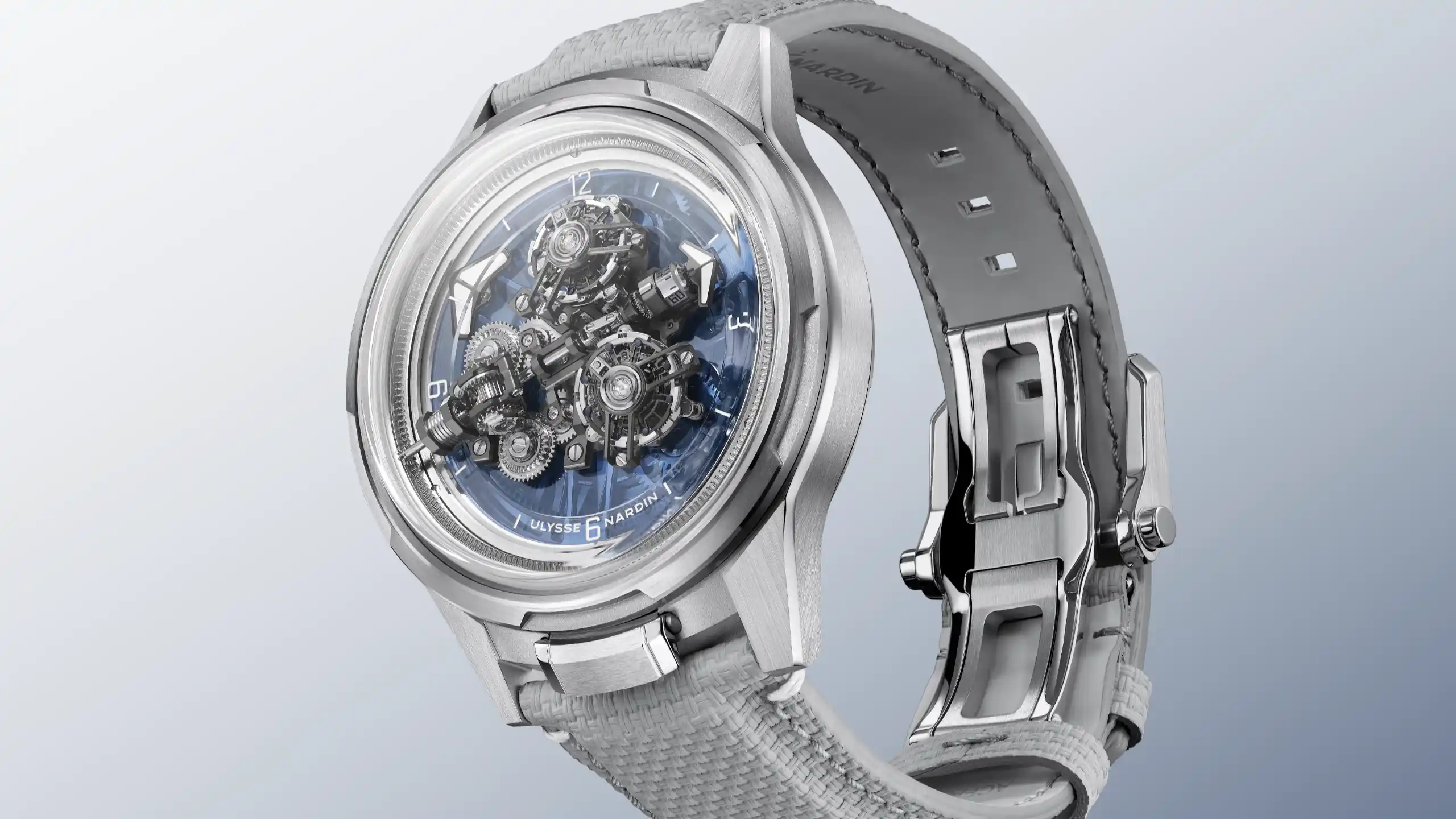
The very daring watch company, Ulysse Nardin, has released what it calls the most complicated time-only watch ever created. Time-only, of course, means there is no additional complicationComplicationAny function on a mechanical watch beyond telling the hours, minutes, and seconds, such as a calendar, chronograph, moon phase, or tourbillon. Complications demonstrate a watchmaker's technical skill, and moreGo to Complication Glossary at all. Just a two- or three-hand watch, so relatively simple.
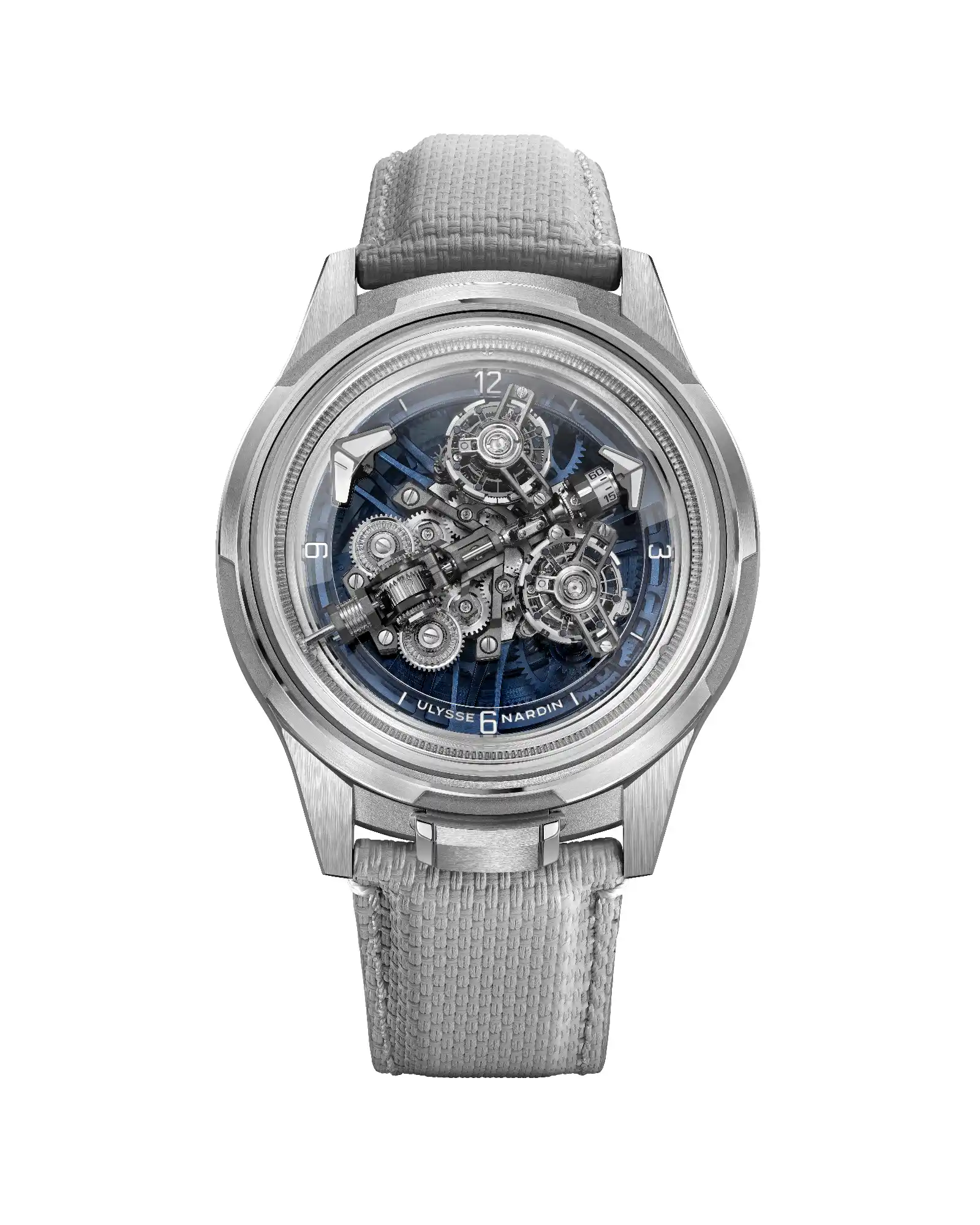
But Ulysse Nardin has never been simple. Its Freak project division began in 2001 with the Ulysse Nardin Freak, and it celebrated its 25th year with an extremely complex, highly complicated, multi-component time-only piece called, quite appropriately, the Ulysse Nardin Super Freak.
The Freaks have always been challenging to appreciate because they seem to add complexity where it isn’t necessarily needed. But the engineers and designers behind Freak have always felt that there is beauty in this additional challenge they’ve taken on, especially because they’re trying to do new things and create new mechanisms.
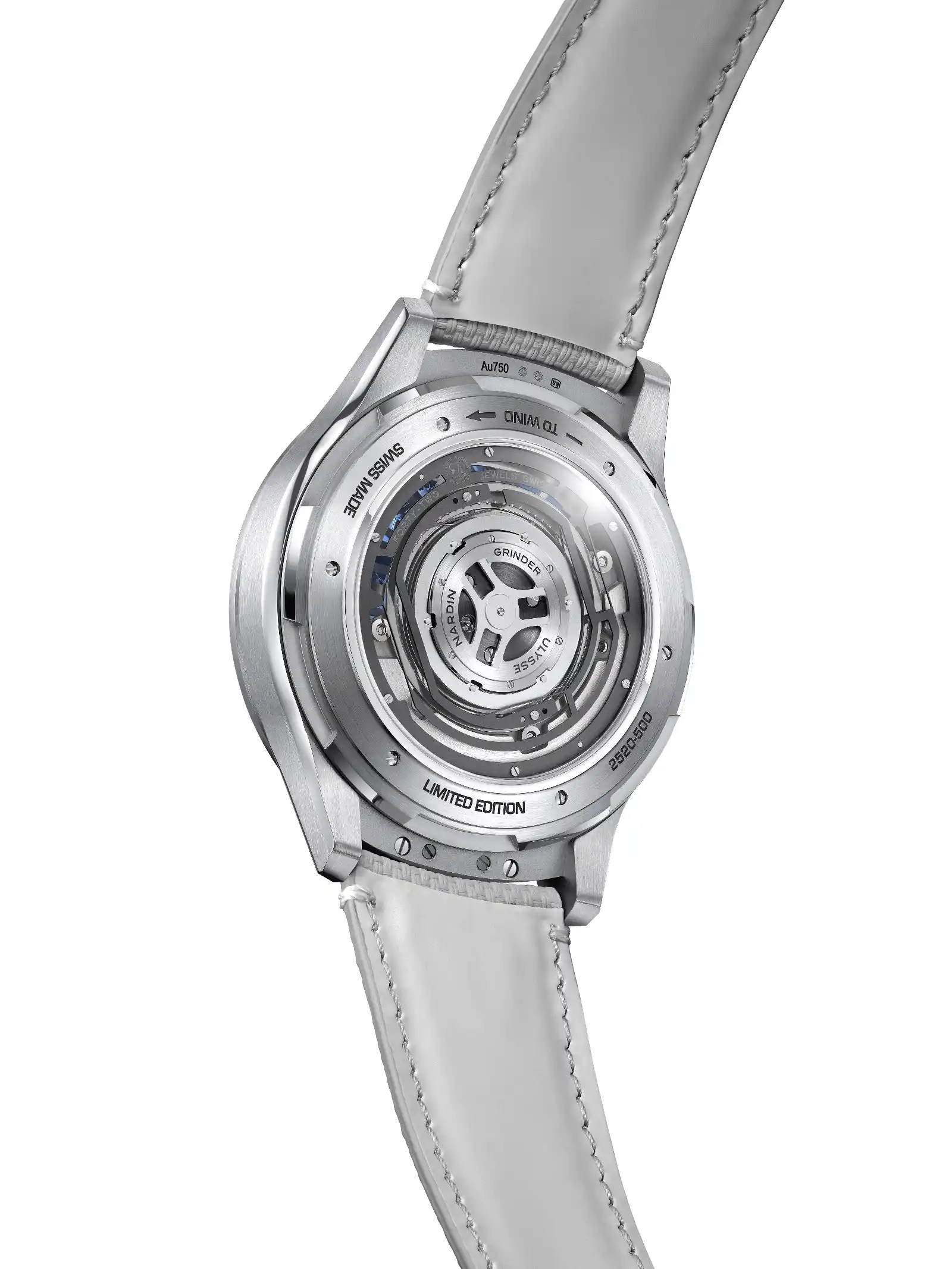
These mechanisms include, for the 2026 novelty Super Freak, not just the obviously complex system of hands you see on the front of the watch. There is also a hugely complex rotorRotorThe weighted, semicircular metal piece in an automatic watch that spins freely with the wrist's movement to wind the watch's mainspring. Rotors are often beautifully decorated with engravings or madeGo to Rotor Glossary system that replaces the traditional swinging center-mass rotor with one that operates almost as an untethered mass. It doesn’t move around a central axis, but moves somewhat freely in the back of the watch.
What this does is create far more efficiency in terms of use of power than the normal rotating mass. It does this because as the new mass—the whole thing is called the grinder system—moves within its flat little cage, it is always grabbing upon something that in turn effectively winds the mainspring.
So where normal systems are operating at less than half the efficiency or taking half the time to wind, this system operates closer to the 90 percent range.
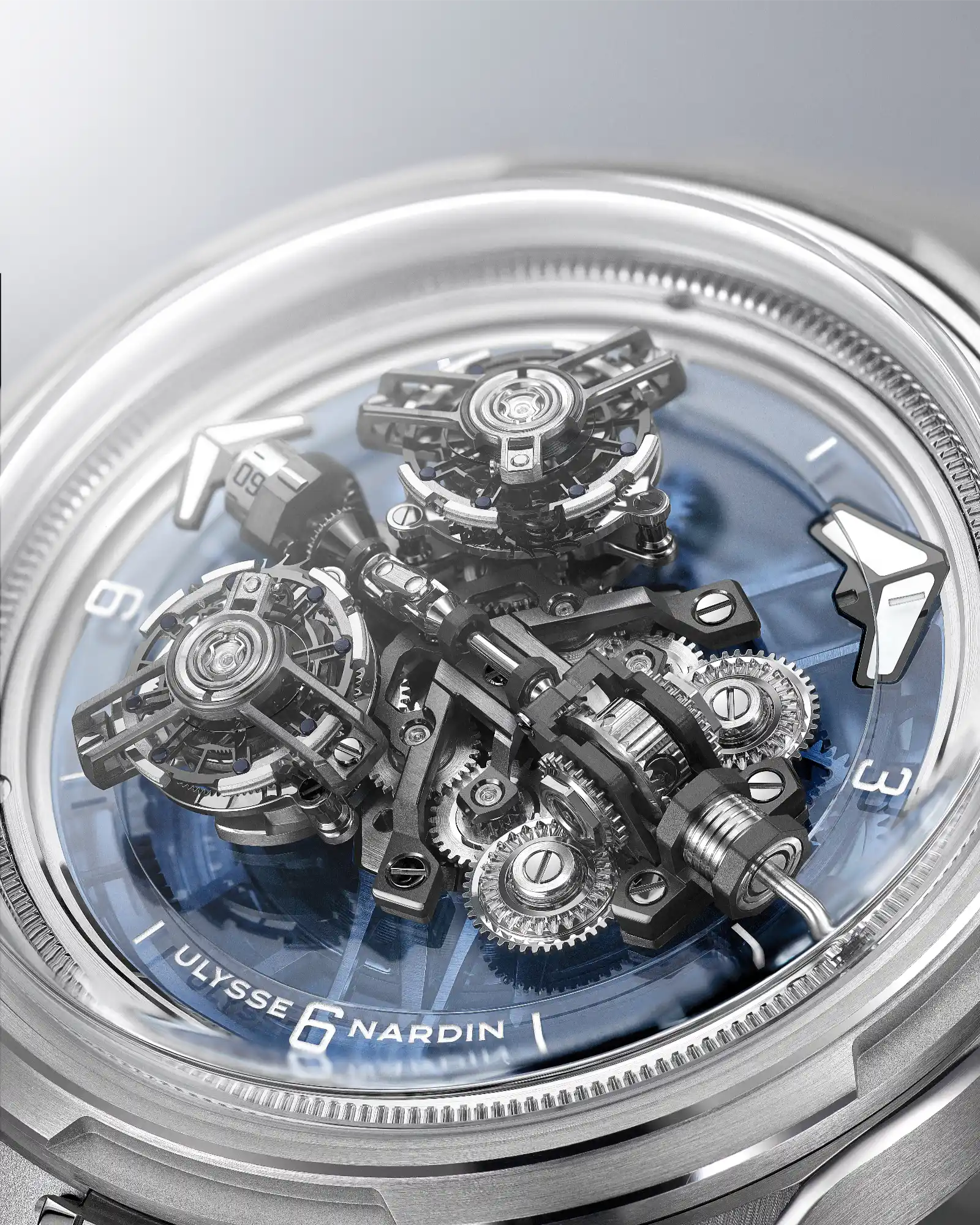
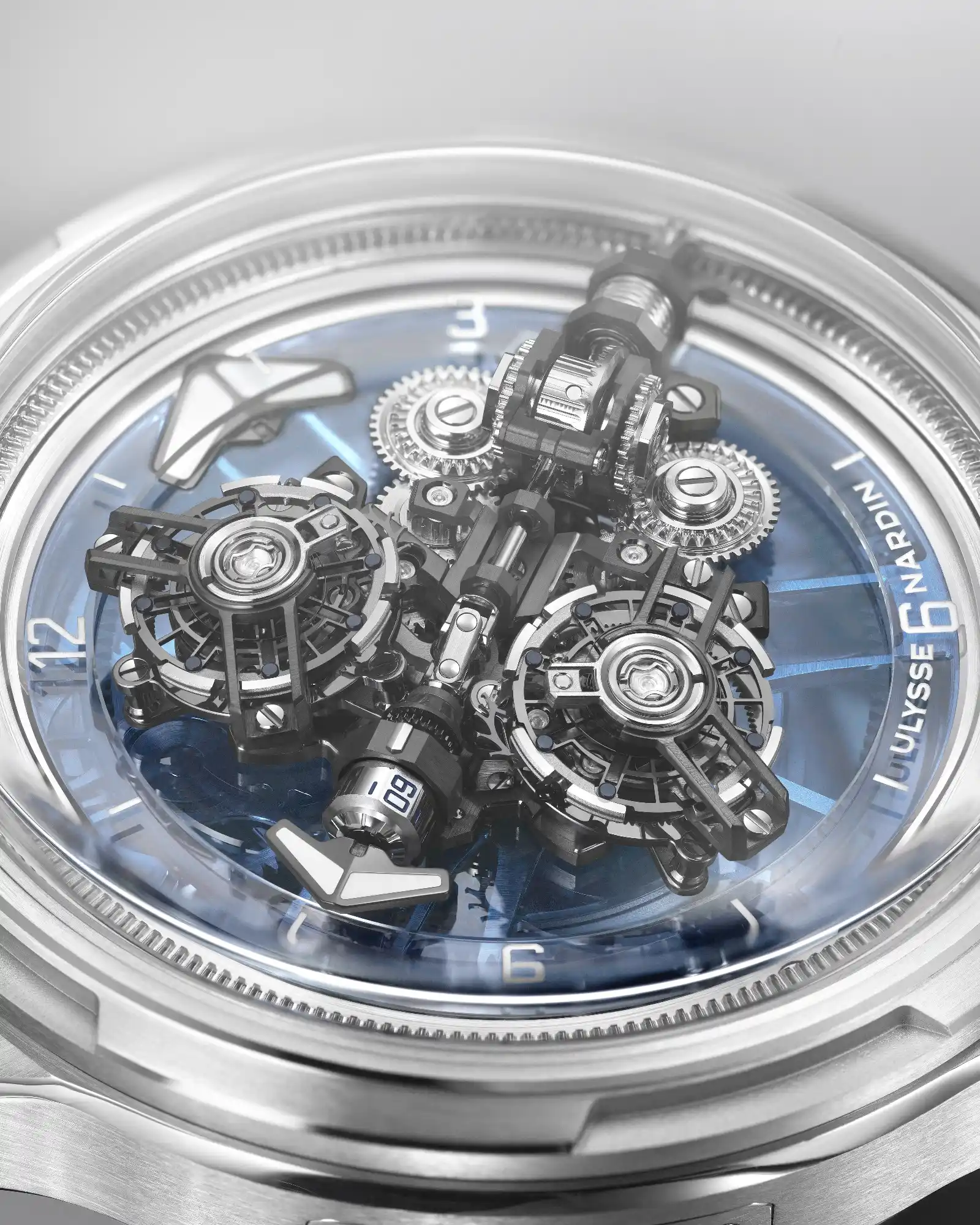
In the Super Freak, this is important because the Super Freak has two tourbillons, which need a huge amount of consistent power. The Super Freak uses a new caliber, UN-252, which uses over 500 components developed over four years. The most obvious thing you see on the rotorRotorThe weighted, semicircular metal piece in an automatic watch that spins freely with the wrist's movement to wind the watch's mainspring. Rotors are often beautifully decorated with engravings or madeGo to Rotor Glossary is two flying tourbillons, each inclined at 10 degrees and rotating in opposite directions. They both complete a full revolution every 60 seconds and are mounted on a shared bridge that is effectively the minute indicator.
There’s a technical reason for all this. They are attempting to improve overall stability because they are combining the outputs of these two tourbillons, and they average their rates. This differential mechanism is only five millimeters in diameter. Both the differential and the seconds display operate on off-center axes that are separate. As such, there was a need to develop a gimbal system to maintain that consistency of energy transmission, so this was yet another technological challenge.
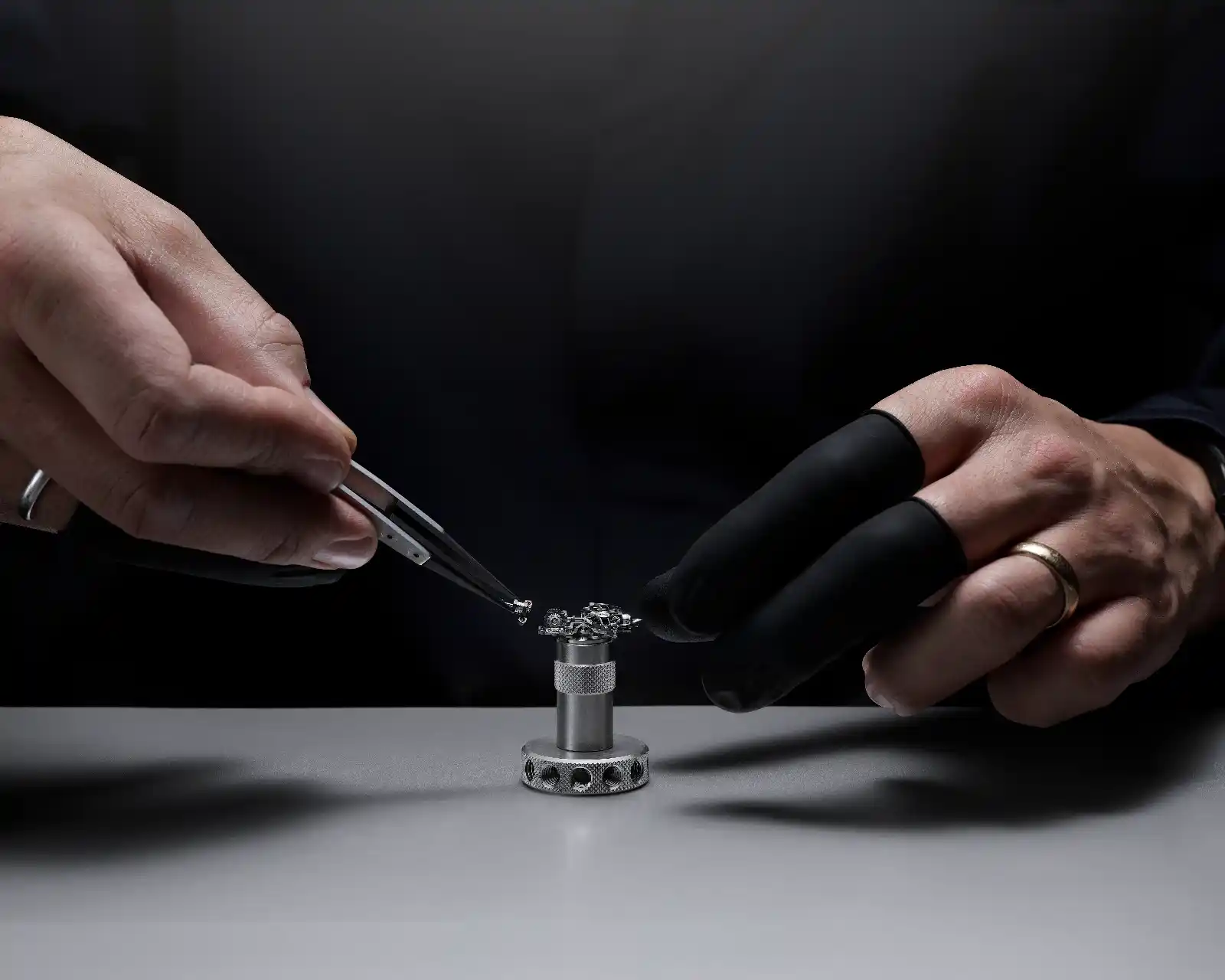
All of these things require much more energy than normally needed for a watch. They had to drive those two tourbillons, a rotating carousel, and an additional seconds display. This is allowed by the use of that automatic winding system called the grinder, which uses a system of very thin blades connected to a moving weight.
But that weight is not rotating around a central axis in the same way that a normal swinging rotorRotorThe weighted, semicircular metal piece in an automatic watch that spins freely with the wrist's movement to wind the watch's mainspring. Rotors are often beautifully decorated with engravings or madeGo to Rotor Glossary is. The end result of this is that those blades grab onto the oscillating weight and are therefore pulling much of that energy to be stored into the system. This highly demanding mechanism can have a power reserve of approximately three days.
And the reason it’s called the grinder mechanism is because when you play with the watch in your hand, you both hear and feel what happens when those tiny blades start pulling on that mass and then start winding the watch itself.
The Freak has always been about innovation, and it continues with new uses of materials. While this is all heavily focused in terms of technological development and therefore mechanical production because of the tight tolerances and the tiny pieces, it is also very much heralding the beauty of fine watchmaking.
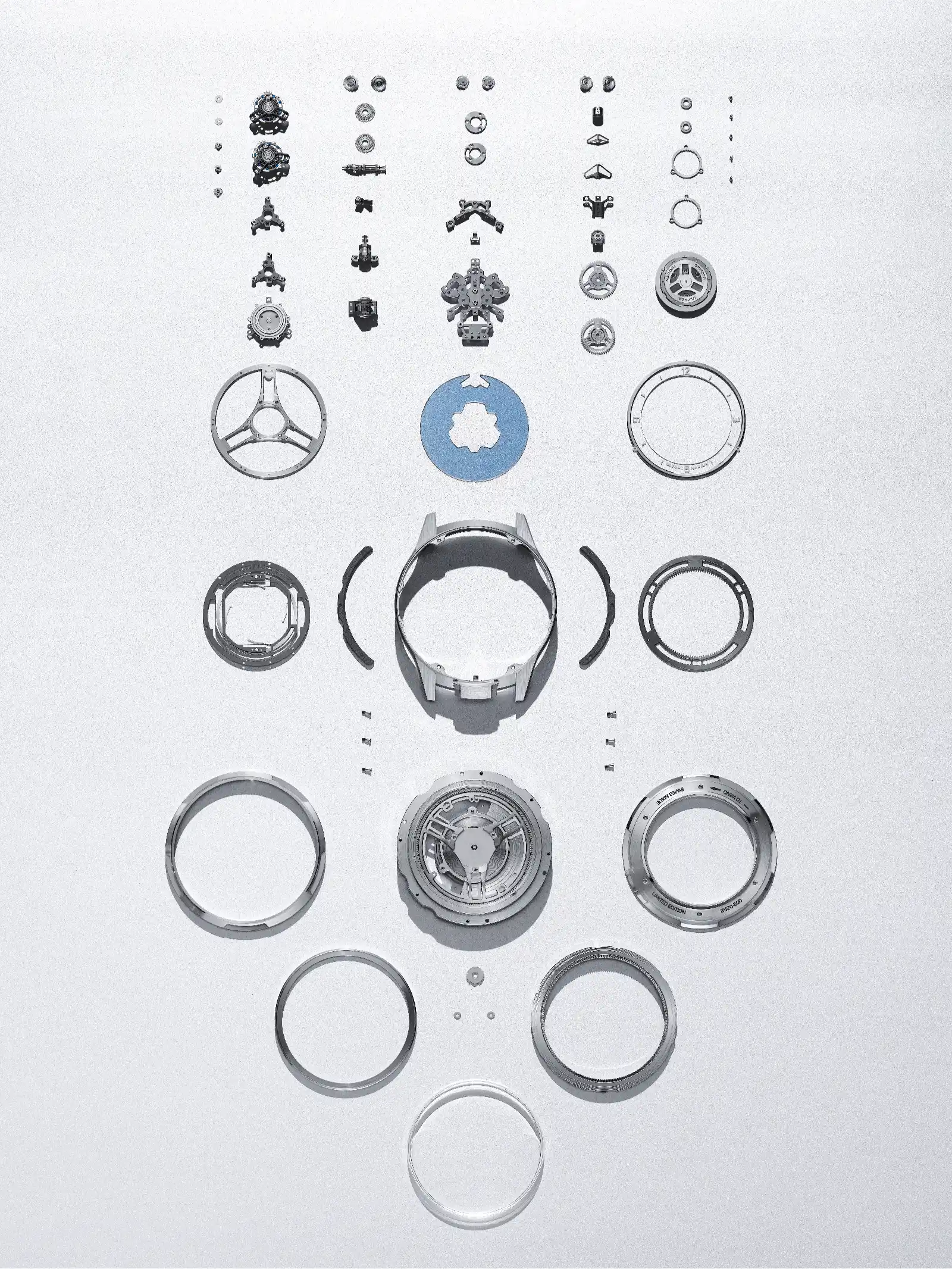
Traditional techniques such as straight grading, polishing, and sandblasting are used on more than 70 percent of the components, which are finished by hand. Because titanium is used for structural elements for weight and mechanical properties and needs more precision, it is additionally challenging to achieve a consistent finish.
The Freak journey for Ulysse Nardin has been going on for 25 years and has been a way to explore alternative ways of doing different things that the industry has done the same way for generations. It displays time in a different way and regulates that time within a different system.
Freaks are extremely divisive and really speak only to a very small portion of the serious watchmaking and collecting community. But that’s fine. This is not a watch that will compete with traditional high watchmaking complications. It’s about finding new challenges and having the determination and vision to follow through on some very radical ideas. With the Super Freak, what we see is the most holistic and complete pulling together of all the different things that Ulysse Nardin has been working on for so long.
It’s a different way to tell time. It puts mechanical wizardry at the forefront and literally the front of the watch. It uses new materials, both visible and non-visible, as it stretches boundaries. It completely throws out the traditional idea of weighted rotors as the basis for winding a watch.
Many will never really understand how much the Freak, the Super Freak, and watches like them change and challenge and redefine the boundaries of fine watchmaking. These were never really meant to be mainstream or easily understood pieces, even within the highest levels of haute horlogerieHaute HorlogerieA French term meaning high watchmaking, referring to the finest mechanical timepieces, characterized by complex movements, painstaking hand finishing, and limited production. Haute horlogerie represents the highest level of theGo to Haute Horlogerie Glossary.
It’s not even about the pieces themselves. It’s about the process created to break barriers, push boundaries, and achieve new depths of understanding and complexity.
All this is, at its most basic, the following of perhaps the simplest of design directions: Form follows function.
This article originally appeared in Robb Report Philippines’ Design Issue, June 2026.
FAQs
The Ulysse Nardin Super Freak is a highly complex time-only watch created to mark the 25th anniversary of the Freak. It uses the new automatic UN-252 caliber, which contains more than 500 components developed over four years.
The Super Freak displays the time without conventional complications such as a chronograph, perpetual calendar or minute repeater. Its complexity comes from the mechanisms used to regulate, display and generate the energy required to indicate the time.
The watch has two flying tourbillons, each inclined at 10 degrees and rotating in the opposite direction from the other. Both complete one revolution every 60 seconds. A five-millimeter differential combines their outputs and averages their rates to improve stability.
The Grinder is an automatic winding mechanism that replaces a conventional centrally mounted rotor with a freely moving oscillating weight and a system of flexible blades. These capture movement efficiently and transfer the resulting energy to the mainspring.
The Super Freak provides a power reserve of approximately three days. Its Grinder winding system supplies the considerable energy needed to operate two tourbillons, the rotating carousel and the additional seconds display.