Maserati Brought Its Racing Heritage Back to the 1000 Miglia




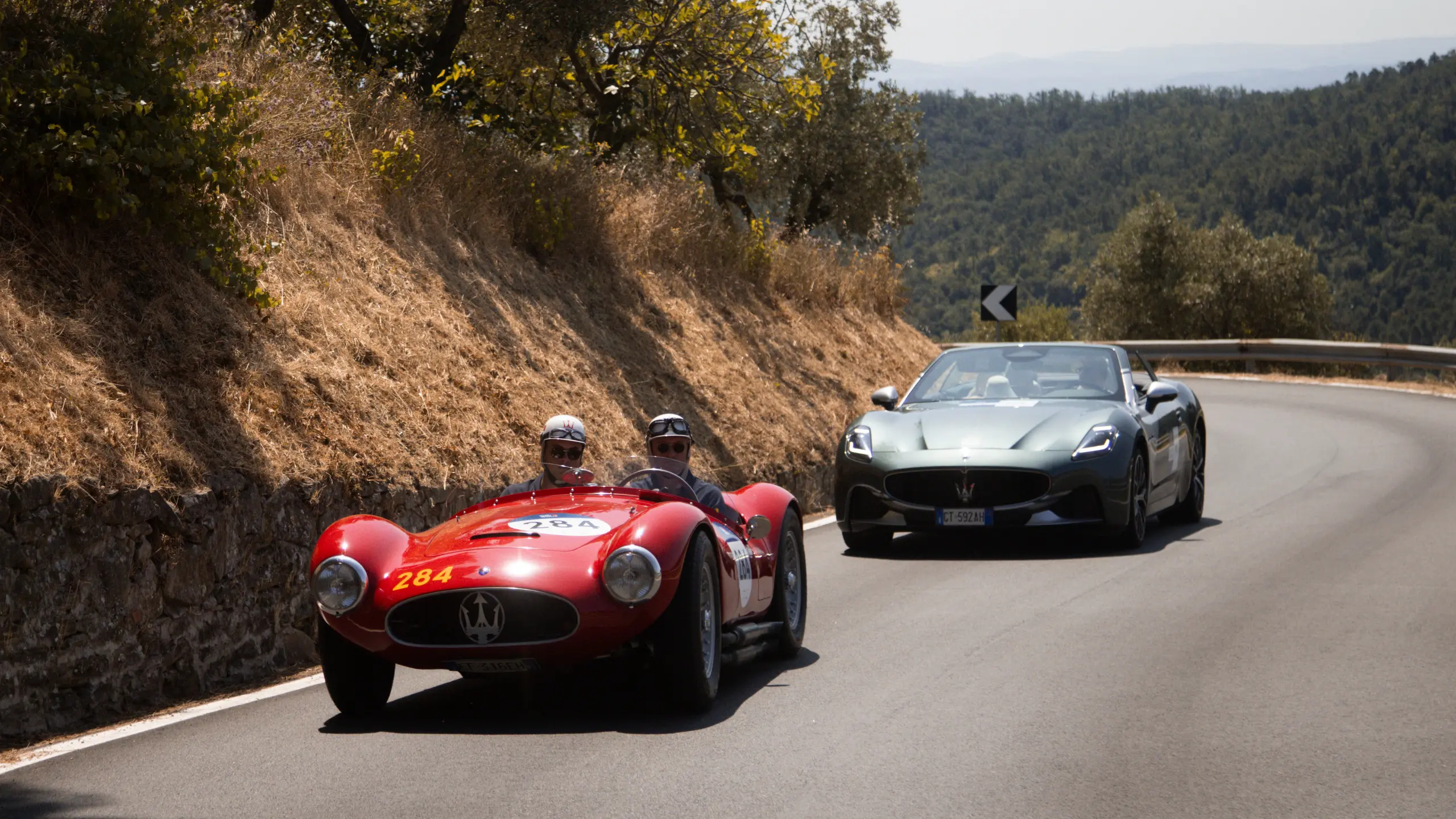
Maserati returned to the 2026 1000 Miglia with a 1953 Maserati A6 GCS/53, honoring Formula 1 pioneer Maria Teresa de Filippis on the centenary of her birth.
For the 44th edition of the famous regularity race, held along the Brescia-Rome-Brescia route last weekend, the Italian marqueMarqueA brand name of a car manufacturer, particularly one associated with prestige, such as Ferrari, Rolls-Royce, or Aston Martin. The term emphasizes a make's heritage and identity beyond product lines,Go to Marque Glossary entered a 1953 Maserati A6 GCS/53, one of the most significant cars in its competition history. The event had a special focus on historic cars that either competed in the original speed race or were produced during the same period, from 1927 to 1957.
Chassis no. 2043 gave Maserati one of its closest links to the 1000 Miglia, having competed in five consecutive editions of the original speed race from 1953 to 1957. Also known as the Sport 2000, the A6 GCS/53 had one of the longest racing careers of its era, with drivers including Luigi Musso. In 2026, owner Igor Zanisi drove it alongside his daughter Lara, with support from Maserati Classiche, the marqueMarqueA brand name of a car manufacturer, particularly one associated with prestige, such as Ferrari, Rolls-Royce, or Aston Martin. The term emphasizes a make's heritage and identity beyond product lines,Go to Marque Glossary’s official program for preserving and certifying its historic vehicles.
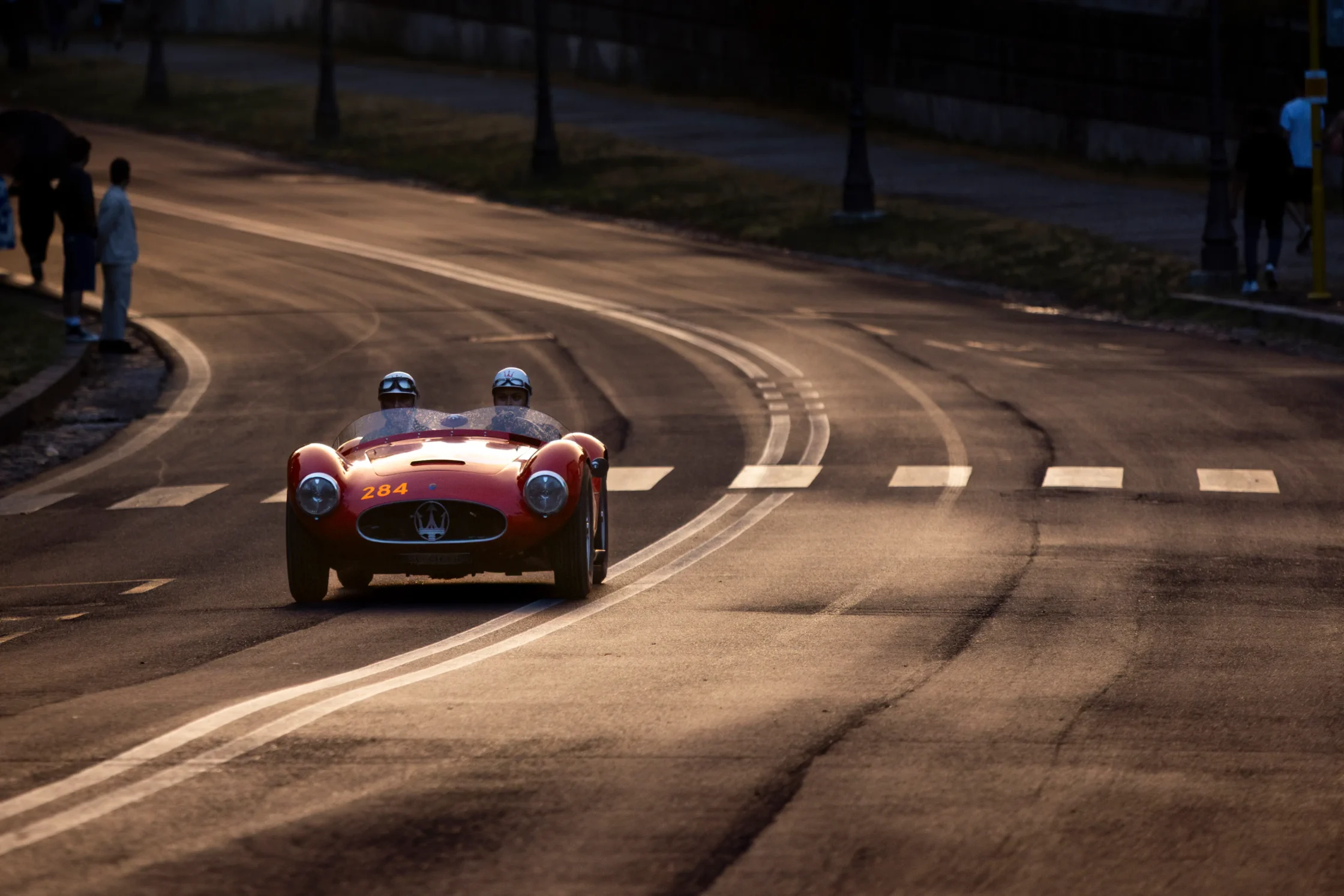
Their participation also carried quite the personal tribute. Maserati and the Zanisi family honored Maria Teresa de Filippis on the centenary of her birth. De Filippis, who lived from 1926 to 2016, was a close friend of Igor Zanisi and remains an important figure in the brand’s history. In 1958, she became the first woman to qualify for and compete in a Formula 1 Grand Prix, racing at the Belgian Grand Prix in a Maserati 250F.
Maserati even brought four models from its current range to the route as support cars, specifically the GranTurismo Modena, GranTurismo Trofeo, GranCabrio Modena, and GranCabrio Trofeo. Each wore a special livery inspired by an important model from Maserati history, namely the Tipo 26, A6 1500, 250F, and 3500 GT. The liveries also referenced the Trident logo used during those periods, turning the contemporary lineup into a moving homage to the marque’s design and engineering heritage.
This year’s 1000 Miglia gathered more than 400 cars from 29 countries for a route of around 1,900 kilometers. The confirmed “figure-eight” course, inspired by the first 12 editions of the original speed race, included nearly 140 timed trials and passed through cities of art, mountain roads, UNESCO World Heritage sites, and other landmarks across Italy. Interestingly, one of the most significant moments for Maserati came when the route passed through Modena during the second leg. The city remains the birthplace of the Trident and the heart of Italy’s Motor Valley.