Lamborghini Celebrates Six Decades of the Supercar Miura




In March of 1966, a still-young Italian company made a rather daring decision.
Lamborghini was, at the time, best known for building tractors. Yet it had decided to change its course and enter the world of automobiles. Barely three years after producing its first car, the company felt confident enough to present a new model developed with the Bertone Group at the 1966 Geneva Motor Show. That car altered the company’s trajectory and reshaped the course of automotive history.
This is the story of the Lamborghini Miura, a car that changed the automotive landscape and, arguably, created an entirely new category. Many consider it the world’s first true supercar. Or, using Lamborghini’s own term, a supersportscar.
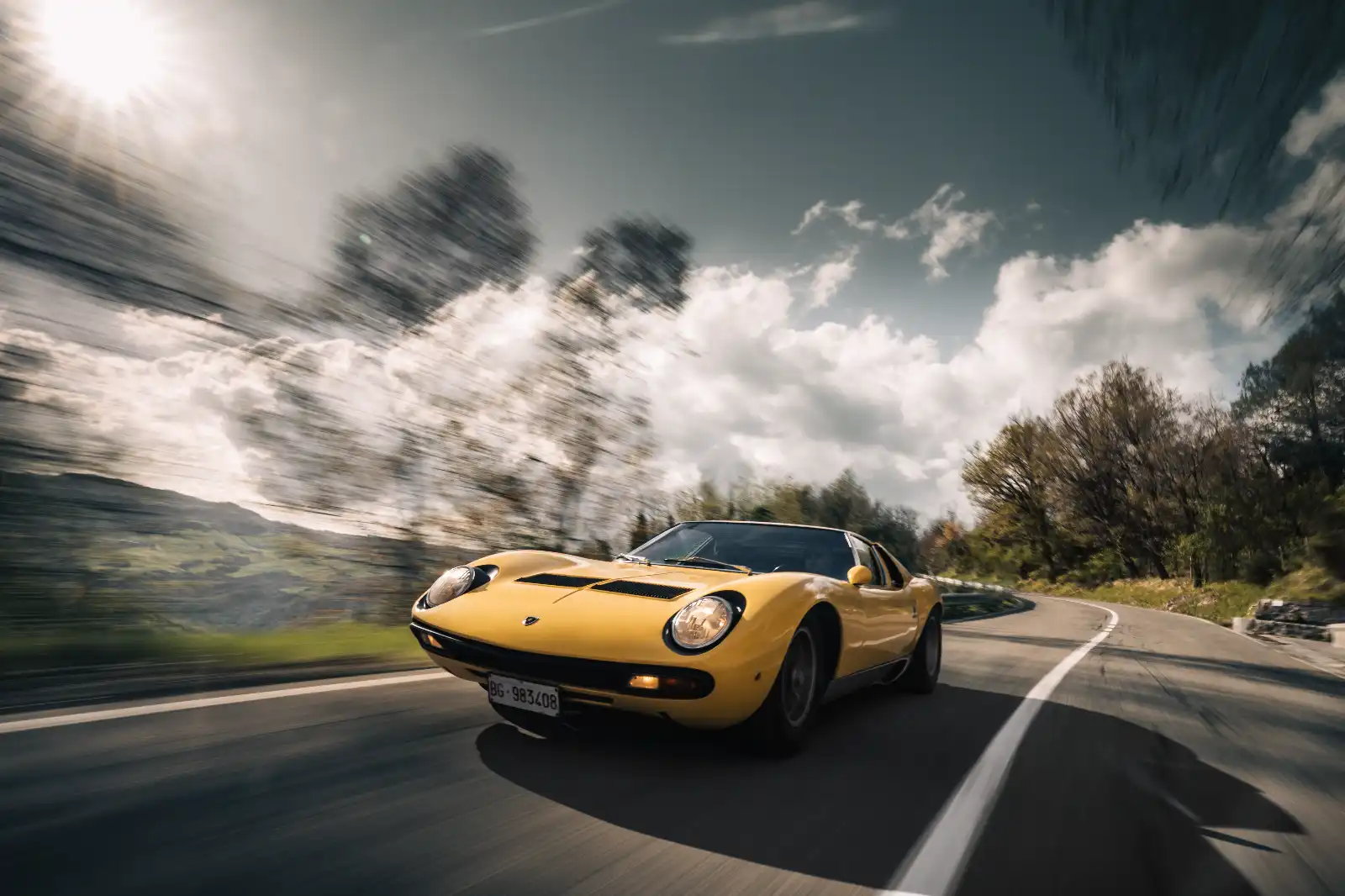
The car’s beginnings trace back a little bit to 1964, when a group of engineers with names that will be well known to motorsports enthusiasts today—Gian Paolo Dallara, Paolo Stanzani, and test driver Bob Wallace from New Zealand—thought about drawing from their motorsports experience and creating a road car. Specifically, a transversely mounted mid-engine layout that would rebalance traditional weight distribution and therefore transform handling and dynamics. Racing technology, but for the long, swoopy roads around them.
This was all done in the workshops of Sant’Agata Bolognese, where Lamborghini still produces its cars.
The architecture of this car, now relatively popular among sports car designers and buyers, was something groundbreaking back then. It was a racing platform that had never been applied to a road-legal production car.
Company founder Ferruccio Lamborghini loved the project and gave it his blessing, and it became known as Project L105.
The world first saw the beginnings of this car as a satin-black bare chassis with a 3.9-liter V12 engineV12 EngineA twelve-cylinder engine in which cylinders are arranged in two banks of six, prized for its smooth power delivery and distinctive sound. The V12 is a hallmark of grand tourersGo to V12 Engine Glossary mounted transversely behind where the driver would sit in November 1965 at the Turin Motor Show.
The whole apparatus (with no body yet) weighed just 120 kilograms and was very different from what the public was used to seeing. At that time, it was still customary to have coach builders work on what the engineers had already drawn up and created, and so several of the best design houses approached Lamborghini about putting curves around that bare chassis.
Legend has it that Nuccio Bertone was the last one to arrive at the Turin stand and told Ferruccio that his studio would design the perfect shoe for this wonderful foot. Whether this is true or not is not exactly clear, but whatever happened worked, because this creative partnership went on to produce one of the most celebrated automobile designs ever.
Now we move further into names that car enthusiasts will recognize.
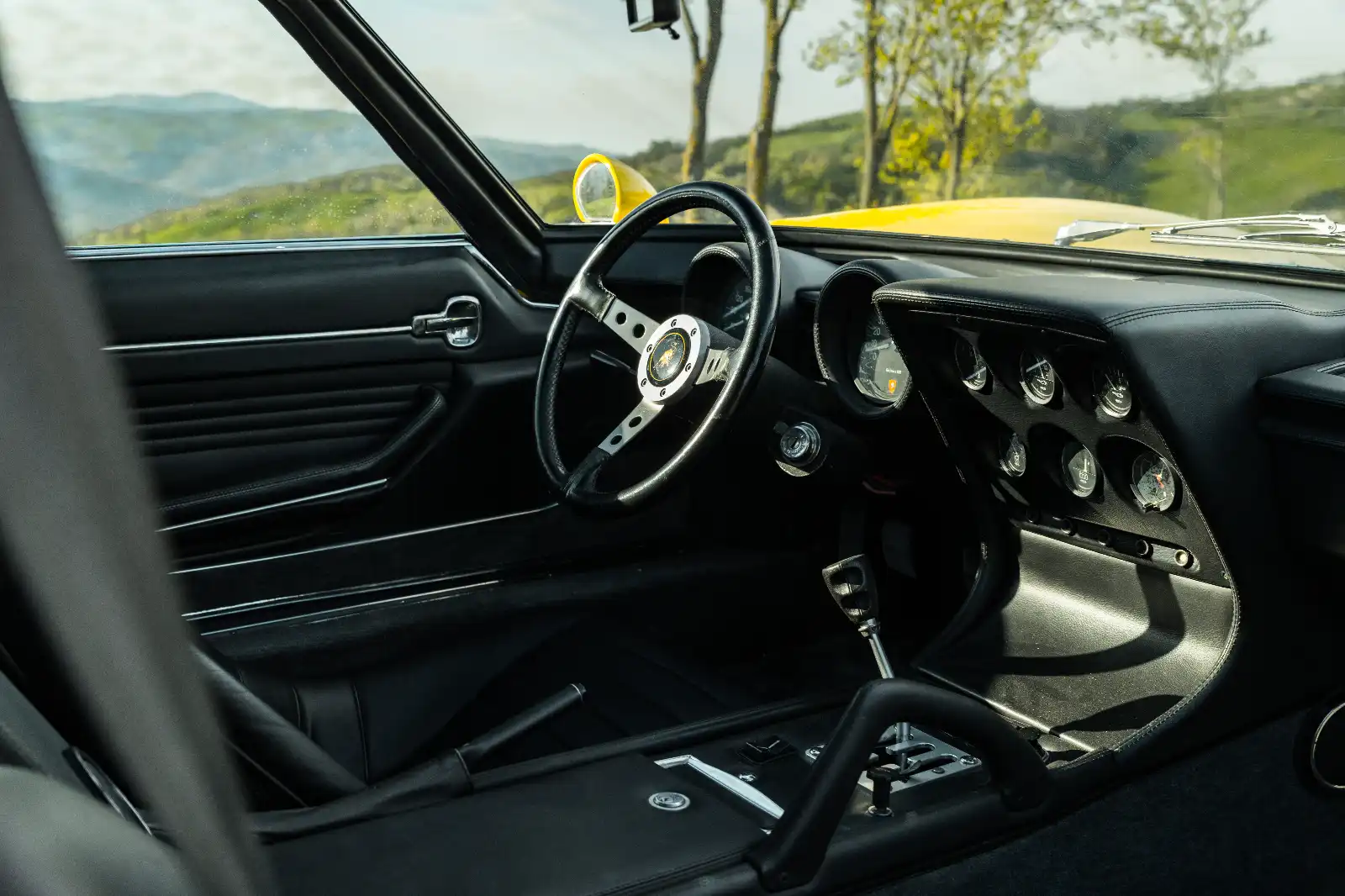
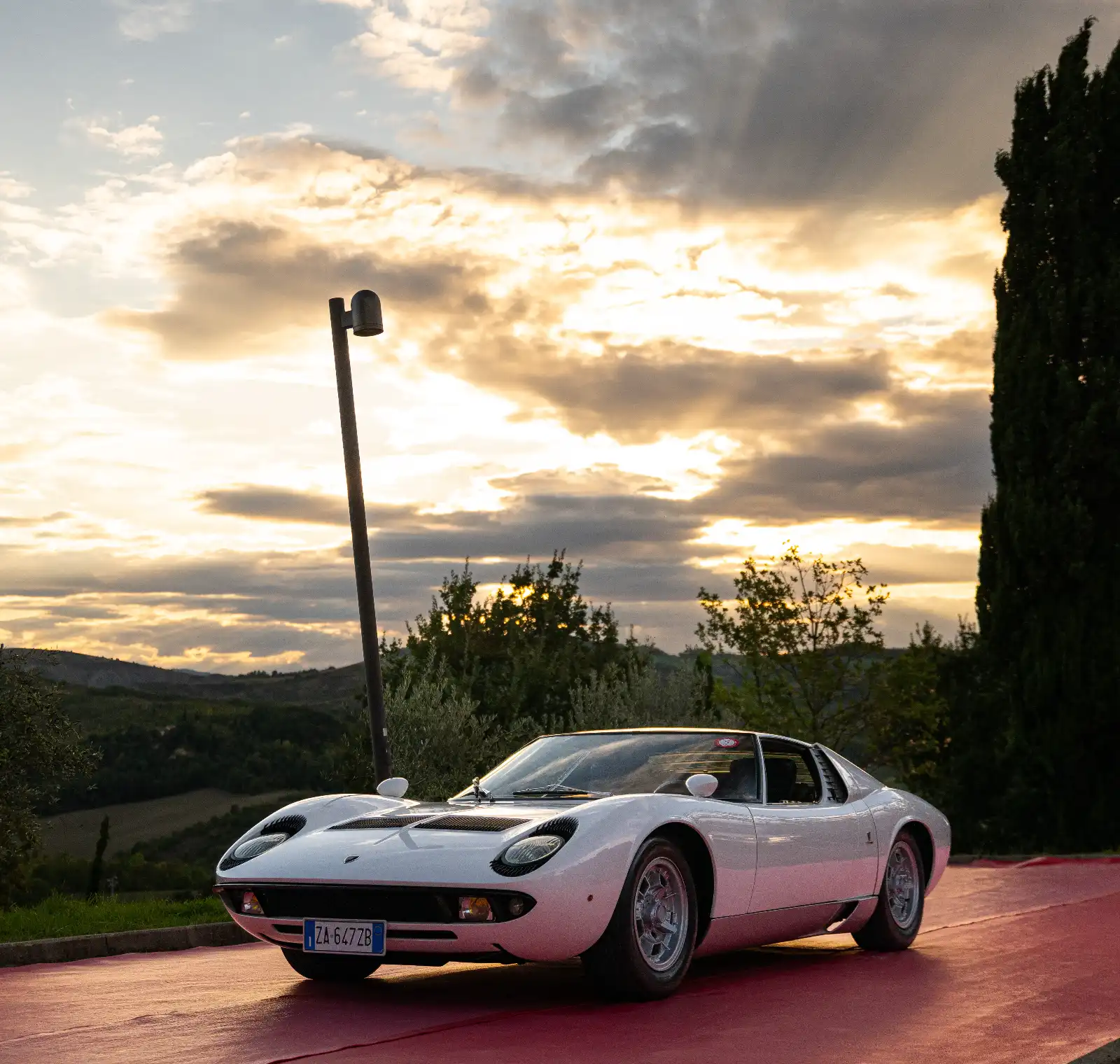
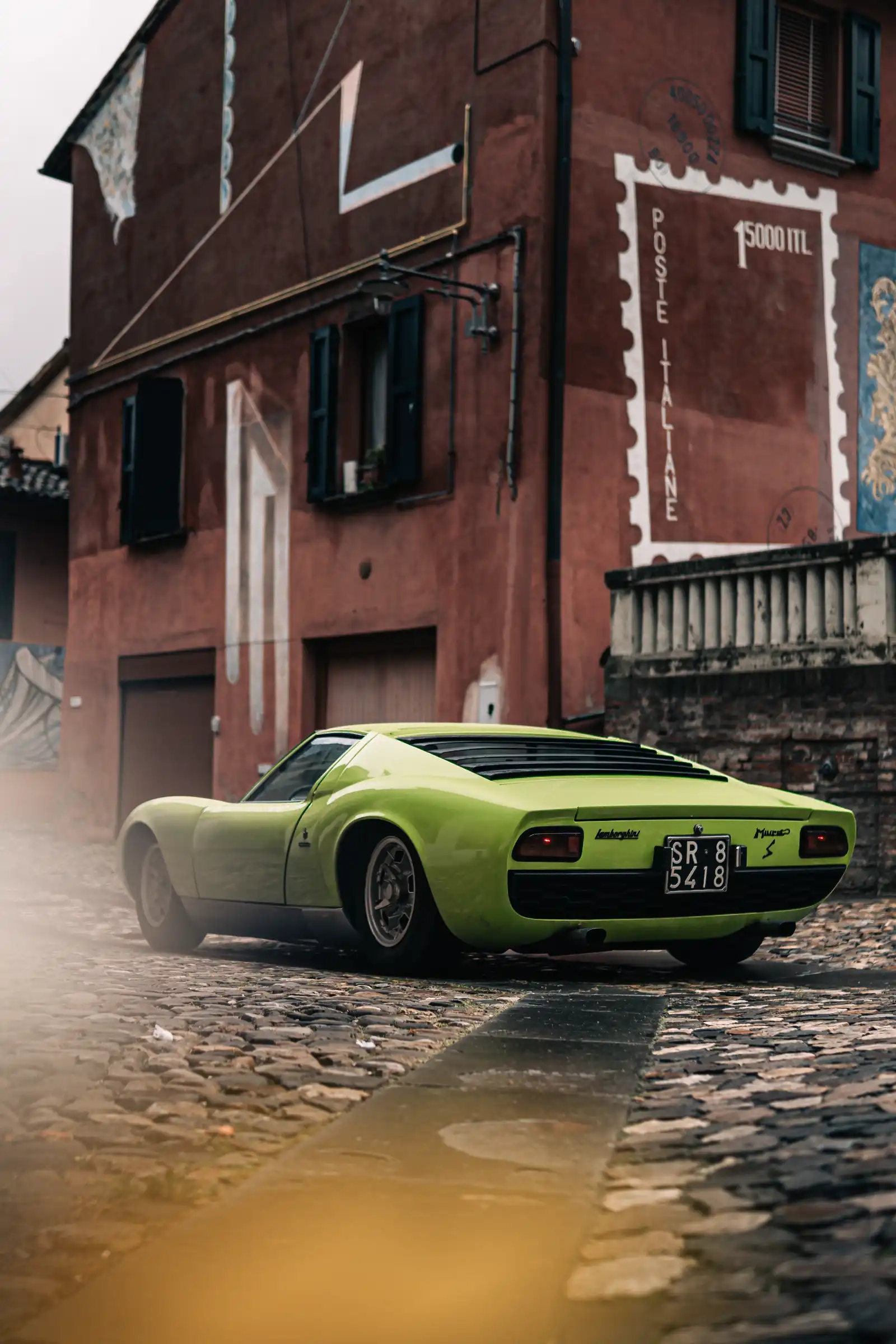
A young Marcello Gandini was serving as head of design for Carrozzeria Bertone. Within a few weeks, he had created a body that was just as unconventional as the bare chassis. It was low, just 105 centimeters in overall height. It was wide, flat, and predatory-looking. It had pop-up headlights that would one day become iconic, along with a distinctive fringe resembling eyelashes. It had generous air intakes needed to handle engine and braking heat, and it used black anodized trim in place of the chrome typically seen at the time.
The car was relatively compact at 4.34 meters in length, made possible by the transverse engine layout. By March 1966, the completed car was ready, and the team had gone from chassis concept to finished automobile in mere months.
That was what people saw in Geneva.
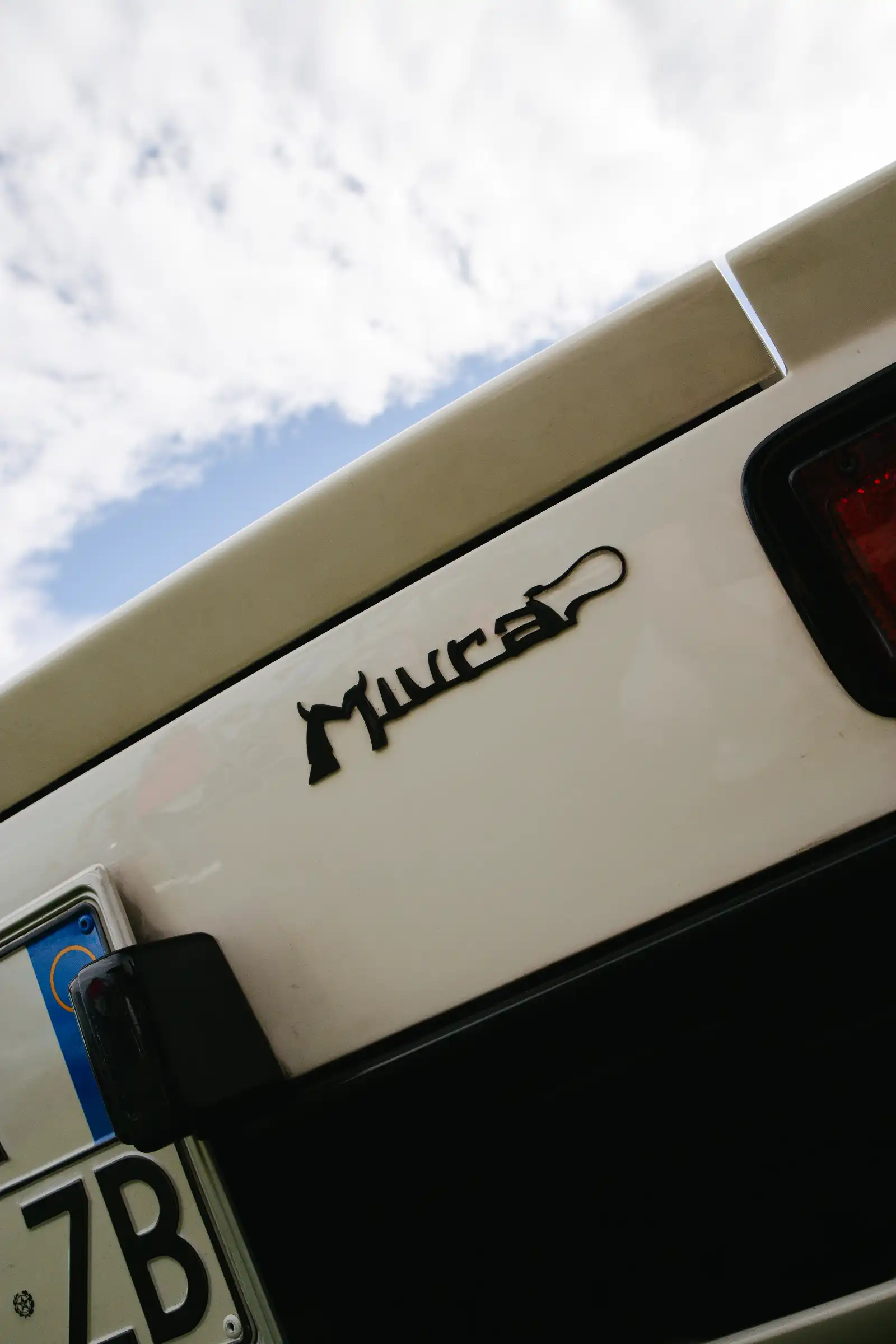
The power plant was just as inventive and serious as everything else. It was a 3,929cc V12 with four camshafts and four Weber carburetors that, to this day, create a wonderful roar. To save space, the engine, gearbox, and differential shared a common housing. This also reduced weight. All this with no power steering.
In its original P400 form, that engine produced 350 horsepower and a top speed of 280 kilometers an hour, making it the fastest production car in the world at the time.
The P400S version, introduced in 1968, added 20 horsepower and refinements such as electric windows, a more sophisticated interior, and sorely needed safety features including ventilated disc brakes.
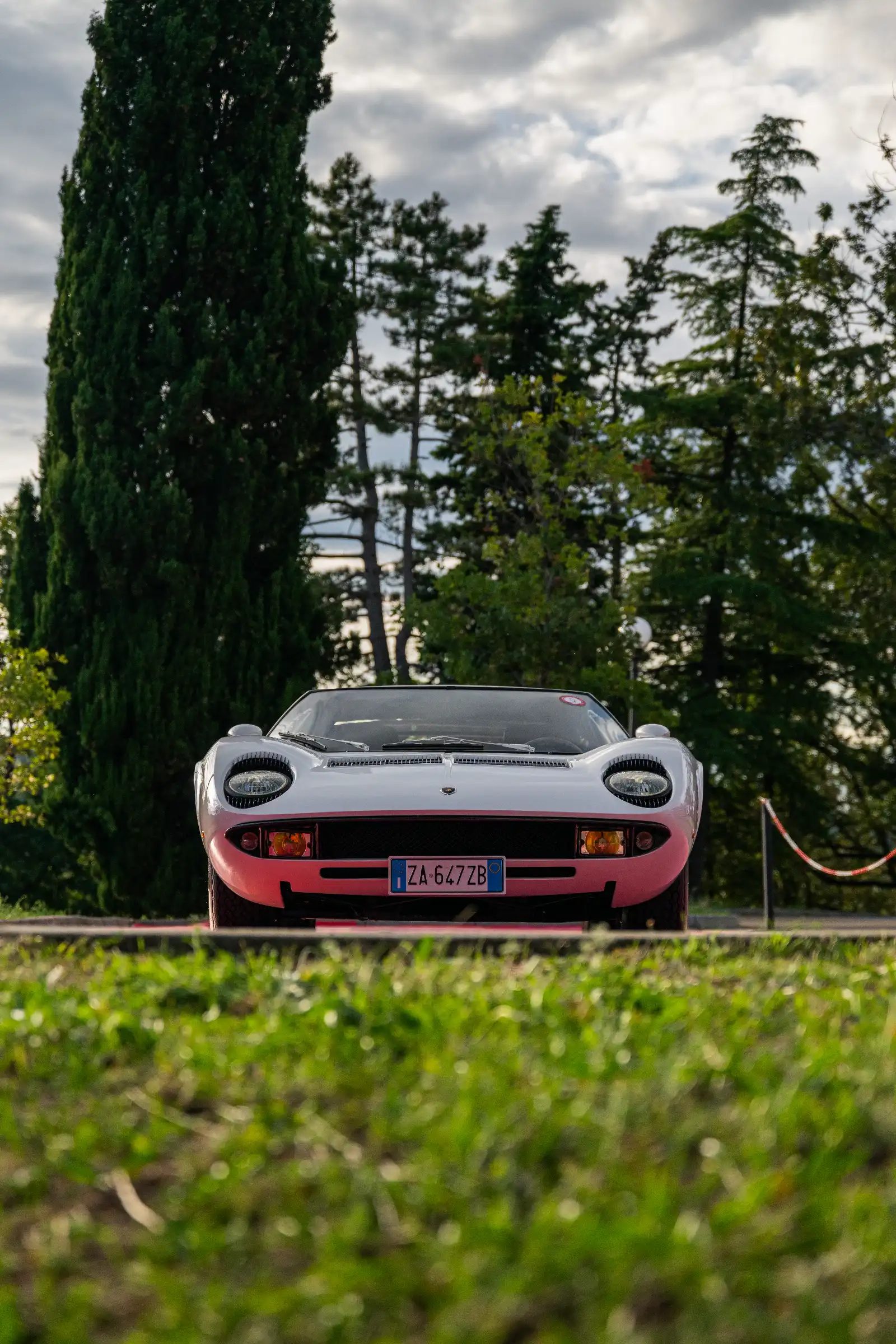
Other models continued to evolve, including the P400 SV, produced between 1971 and 1973. Changes occurred here as well, including revisions to the lubrication system and a widened rear axle for even greater traction.
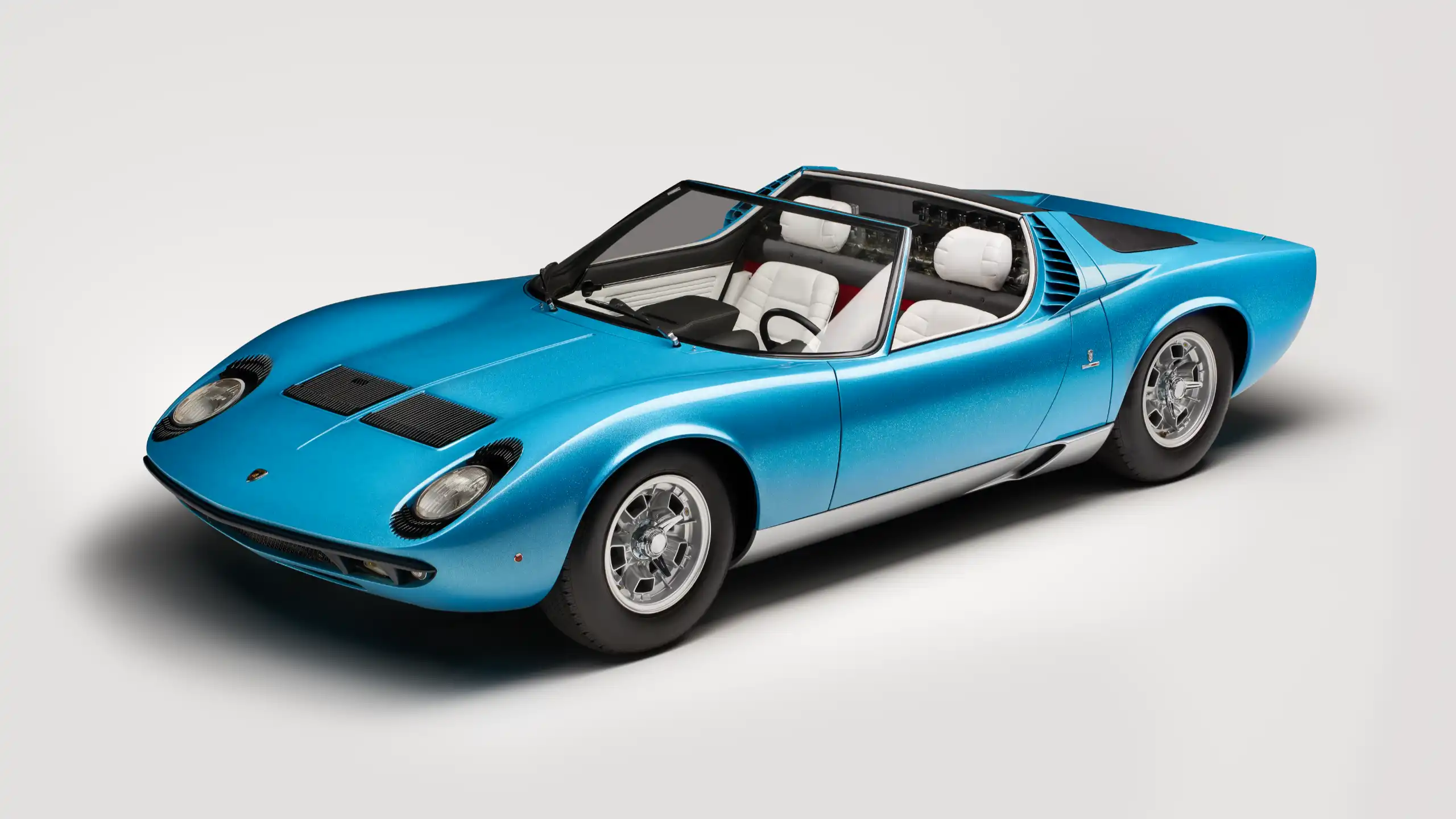
A total of 763 Miuras were built between 1966 and 1973, with at least 10 considered one-offs or special projects. Most notable among these was the 1968 Miura Roadster, an open-top version created by Bertone in lamé sky-blue paint with white leather and a red carpet—one of the most flamboyant interpretations of the car ever conceived.
The Miura basically threw out the rule book and was propelled by gasoline, passion, and probably a whole lot of espresso. In many ways, it defined what Lamborghini would become. The Countach, Diablo, Murciélago, Aventador, and even today’s Revuelto—which pairs that V12 platform with an electric hybrid system—can all trace their DNA back to that original V12 experiment.
![Rear view of a yellow Lamborghini Miura on a winding road with a guardrail and blue sky above I wisps of clouds.”] ,](https://assets.robbreport.ph/wp-content/uploads/2026/05/lamborghini_incontent-010.webp)
This year, Lamborghini celebrates the Miura with events across the world. Perhaps the hottest invitation, if you can score one, is a dedicated Polo Storico tour through northern Italy in May, guiding Miura owners along the roads and landscapes that shaped the car’s earliest development.
“The Miura embodies our DNA,” said Stephan Winkelmann, president and CEO of Lamborghini. “Bold, visionary, and always ahead of its time.”
Photos courtesy of Lamborghini