Shenzhen’s Breakout Watch Brand Has Collectors Talking




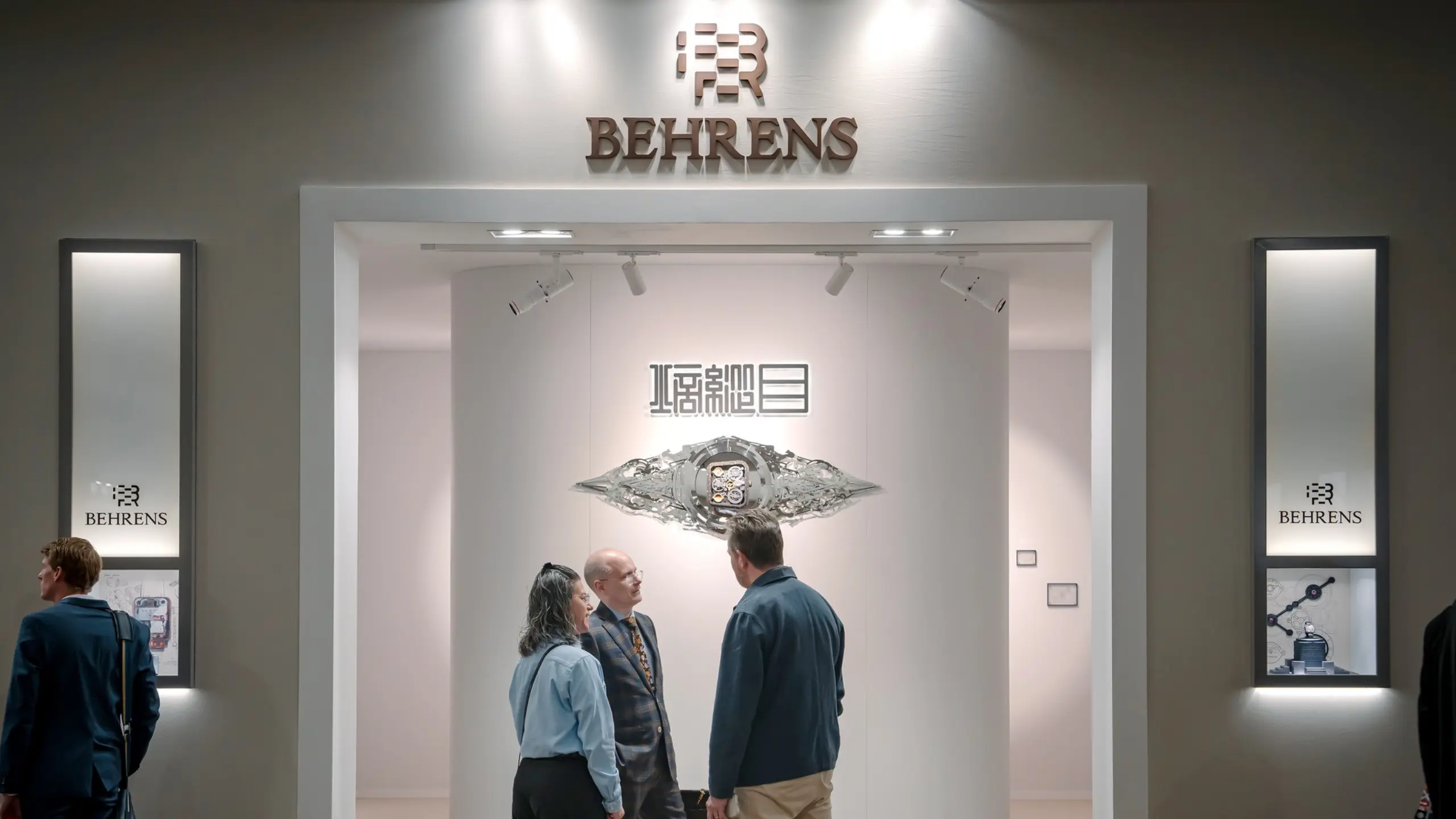
For generations, fine watchmaking has been a Swiss story in a lot of ways. The industry defined what a great watch was supposed to be. So when Behrens, an independent brand from Shenzhen, walked into Watches and Wonders Geneva this April to take its place alongside Rolex, Audemars Piguet, and Patek PhilippePatek PhilippeA Swiss watchmaker founded in Geneva in 1839 and widely regarded as among the most prestigious in the world, known for complications, hand finishing, and its slogan about passing watchesGo to Patek Philippe Glossary, it became one of the more interesting storylines at the summit.
Behrens became the first Chinese independent watchmaker to exhibit there. It didn’t present itself as a novelty brand nor was it received as a diplomatic gesture toward diversity, but as a brand that had spent more than a decade building the kind of horological credibility that buys a seat at that particular table.
Center stage was the Pupil Ultralight family, drawing on motifs from the ancient Shu civilisation, Behrens’ designers translate the “Bronze Diamond Eye” into a triangular layout on the BM09 calibre, distilling a 3,000-year-old culture filtered through a movement so skeletonized it seems to barely exist.
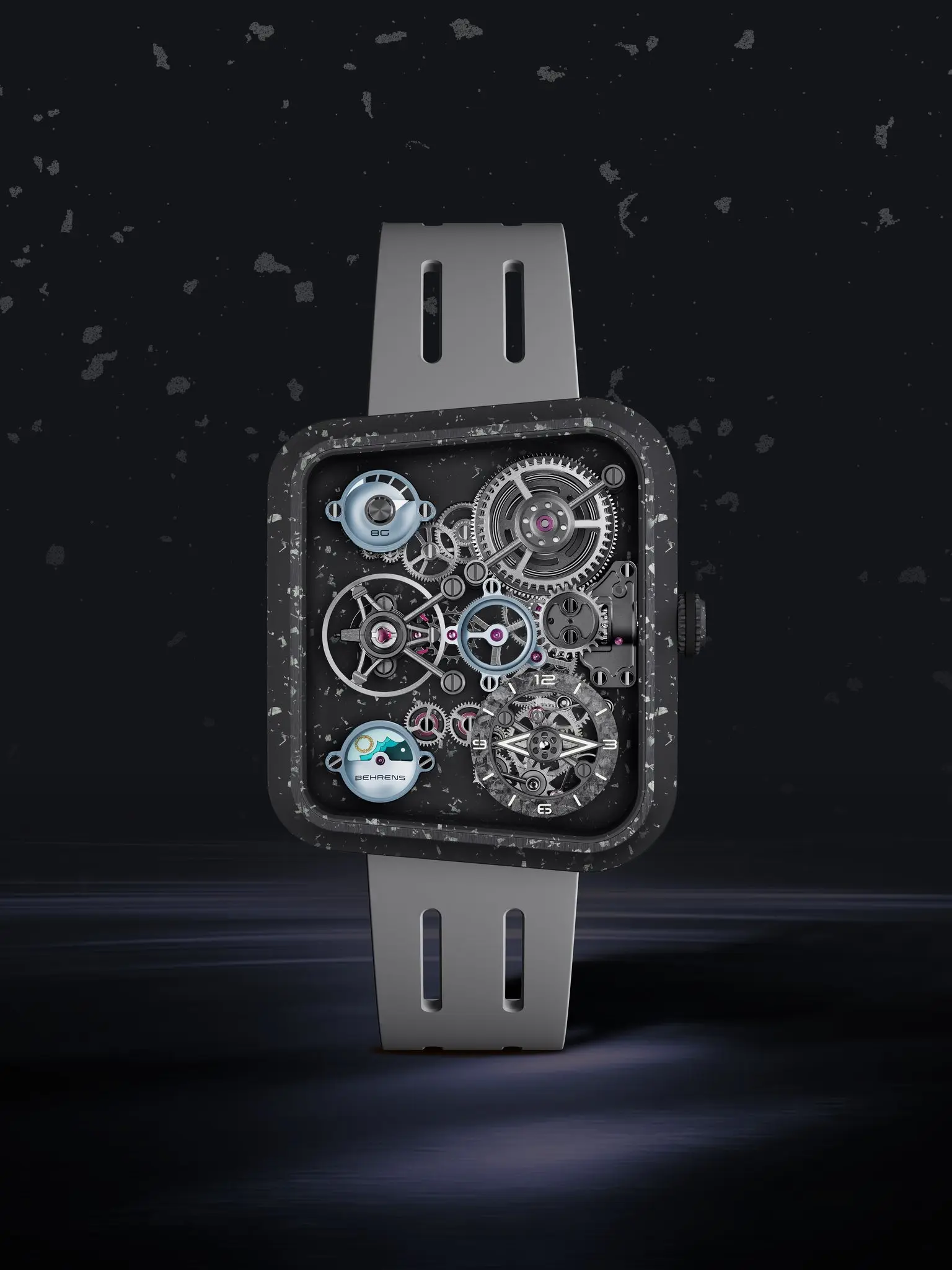
The industry was especially surprised by the non-limited titanium Pupil Ultralight 14G (an astonishingly feather-light 14 grams, priced at $9,200), and two extremely scarce Pupil Ultralight 8G editions crafted from a Lightweight Monolayer Graphene Hybrid with gold flecks, each limited to nine pieces and priced at $33,800.
The 8G models, at about eight grams on the case alone, possess jumping hour mechanics, a 45-hour reserve, and a day/night indicator flashing Behrens’ signature asymmetric ‘Hu’ case. The experience of wearing it, according to those who tried it on the floor in Geneva, was closer to wearing nothing at all.
The collaborations are equally considered: a co-creation with the Russian independent master Konstantin Chaykin, and a recent partnership with Vianney Halter (a Swiss watchmaker widely regarded as one of horology’s great eccentrics) produced the KWH Master Series, a piece that signals Behrens’ geographical and intellectual arrival.
A Short History of Behrens

Lin Bingqiang, who founded Behrens in 2012, came from high-end jewelry design and education before pivoting into watches, with an aesthetic sensibility first, mechanical ambition second.
The name itself pays homage to Peter Behrens, the German industrial design pioneer who argued that function and beauty weren’t competing values and that a turbine hall could be considered a temple.
That philosophy landed in a city perfectly suited to realize it. Shenzhen’s industrial ecosystem gave Behrens access to CNC machines, 3D printers, and a full prototyping department. So what might take a competitor a year to develop, Behrens does in three months. Speed, in a craft usually measured in centuries, turns out to be its own kind of power.
What Behrens makes with that speed is genuinely unusual. In the Rotary, one of the brand’s breakthrough pieces, twin rotors inspired by the Wankel engine developed for Mazda serve as hour and minute indicators across a skeletonized dial, so the whole mechanism runs like a miniature race car powertrain on your wrist.
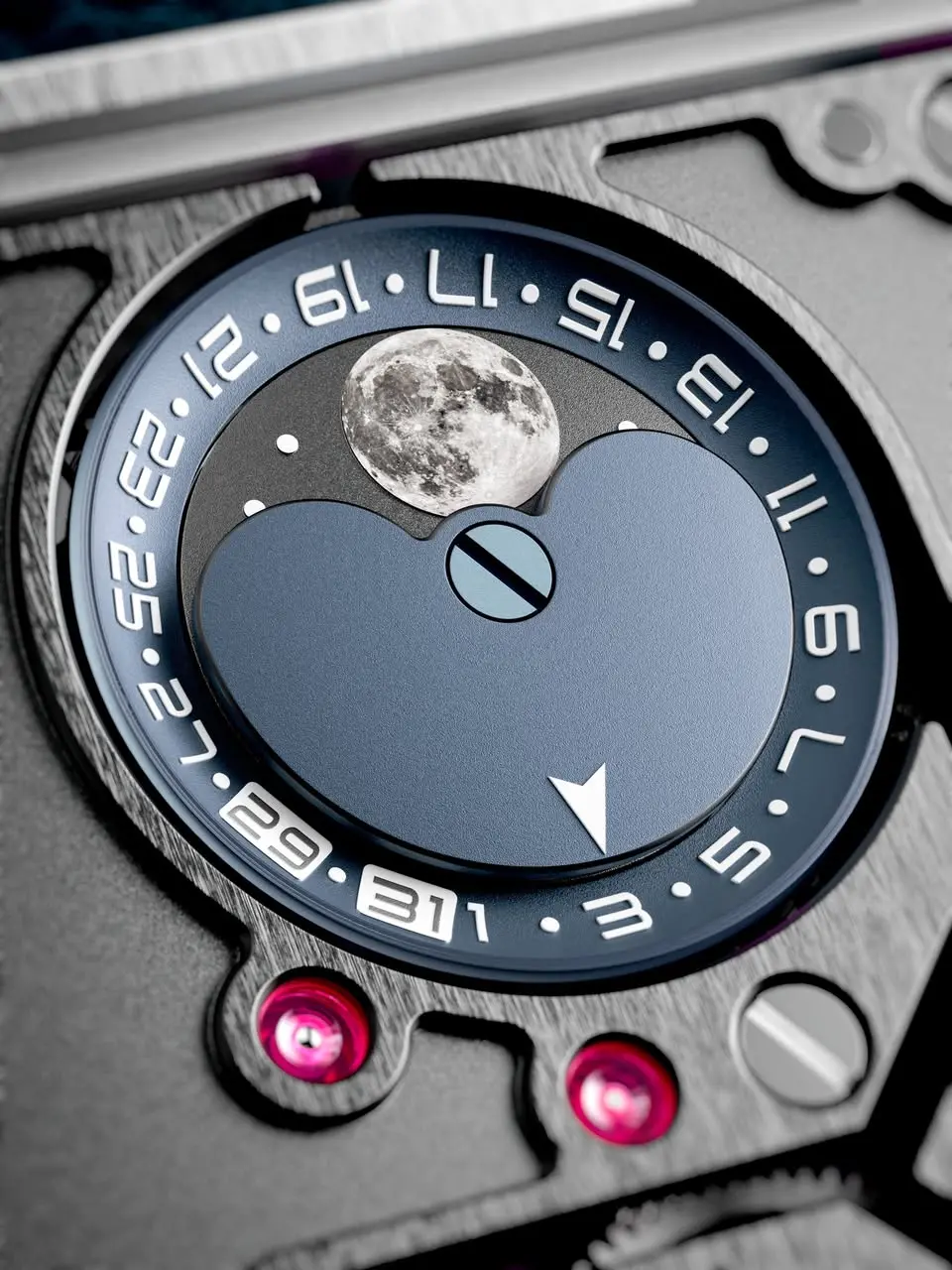
It earned a GPHG nomination. So did the Apolar, which features a rotating Earth with an orbiting Moon tracking an accurate 27.32-day lunar cycle, which is an astronomical complication with the visual drama to match. These are not complications borrowed from a Swiss playbook; they seem to have been conceived by someone who looked at conventional watch design and decided that watchmaking could move towards another direction.
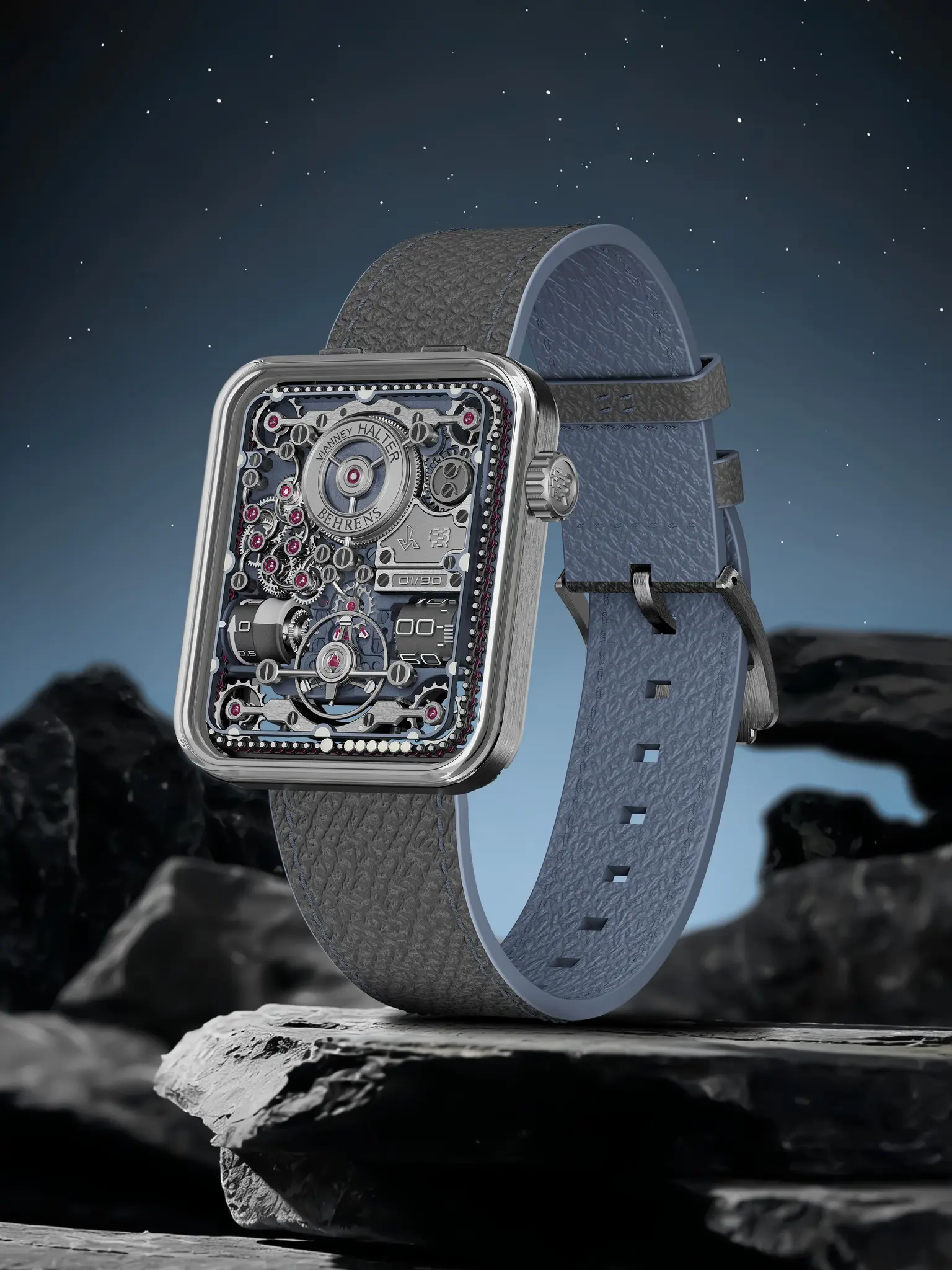
Meanwhile, the KWH, developed with Swiss independent master Vianney Halter, tells the time through a patented micro-chain mechanism—a seven-dot pixel snake rotating continuously around the dial, with minutes and power reserve on rotating cylinders inspired by vintage electricity meters. The movement runs 870 components, 170 jewels, twin barrels, and a 72-hour power reserve. The original 18 pieces sold out instantly at $44,800 each. A second edition in tantalum and ceramic followed.
For the collector who has been paying attention, none of this is surprising. Behrens has been stocked by The Hour Glass, the Southeast Asian retailer with one of the sharpest independent watch edits in the world, for some time now.
Auction prices have ranged up to nearly $28,400 for a Perigee, a watch that retailed for considerably less; it’s the kind of secondary market behavior that signals genuine collector demand, not marketing. The brand’s entry-level Original series starts under $5,000, meaning the conversation is accessible before it becomes expensive.
What Behrens represents, ultimately, is something the watch world has needed for a while: a high-complication independent that didn’t learn the rules from Switzerland, because it grew up somewhere else entirely. Its references are ancient Chinese civilizations, Japanese rotary engines, the Nokia Snake game, and interstellar travel. Its complications are things no one asked for, which is exactly what the best complications have always been.
More information here.