6 Legendary Names You Need to Know From the World of Watchmaking




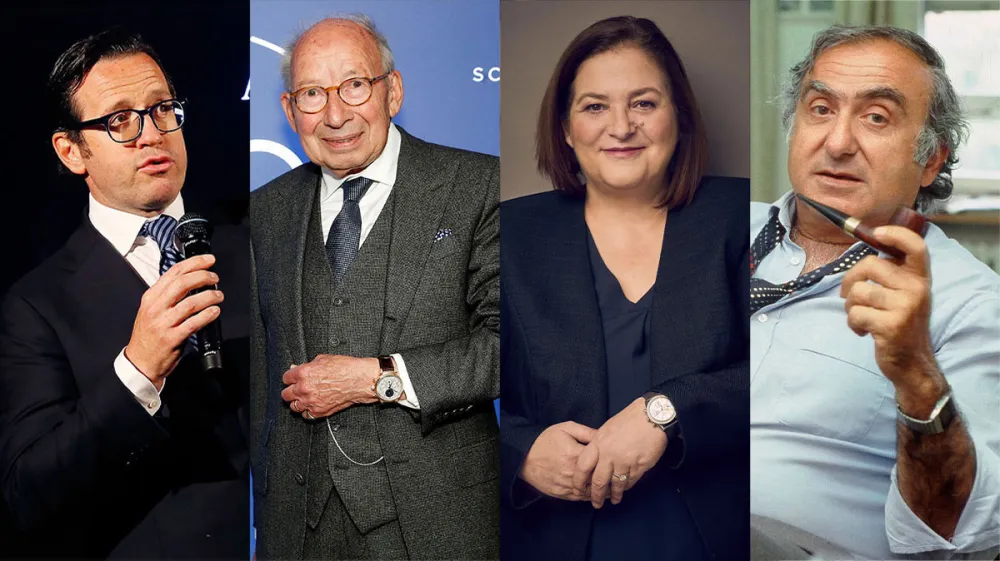
Watch collecting has never been more popular—or bigger business. What was unthinkable in the 1990s or early 2000s when many vintage Rolexes traded for a few-thousand dollars has come to pass: The deeply idiosyncratic, highly nerdy, and ever-fascinating world of collectible horology is now a cultural juggernaut with an endless scroll’s worth of coverage topping the sartorial headlines. The days when only you and your pedantic friends knew the difference between 14060 and 16610 Submariners are long in the rearview mirror.
But while it’s the watches themselves that often take center stage in this story of mechanical innovation and the ebb and flow of cultural relevance, there are a handful of personalities without whom we’d have long ago ditched our wrist wear. Everybody knows the name of Gérald Genta, the gifted Swiss industrial designer from whose pen stemmed the Royal Oak, Nautilus, and countless other important designs. But what of the other folks whose influence reverberates down through the decades—the movement designers, conglomerate owners, and brilliant marketers who revived an ailing industry? What follows are just a handful of the many people who, though not all household names, made horological waves that are still being felt today.
Carole Forestier-Kasapi
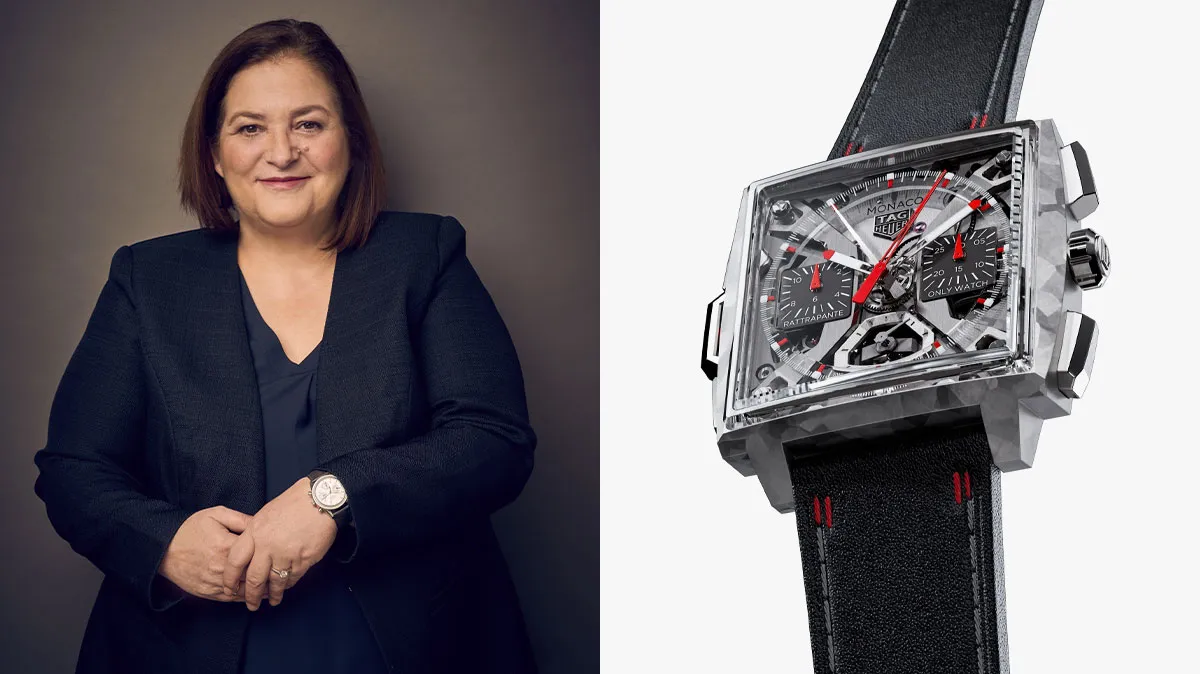
In 1997, a young movement designer fresh out of technical college won the Prix de la Fondation Abraham-Louis Breguet for an unconventional, centrally mounted carousel movement. Adopted by Ulysse Nardin’s brilliant technical director Dr. Ludwig Oechslin into the Freak, it helped launch the career of an unsung hero in contemporary watch design. After spending 15 years as head of movement creation at Cartier—where she oversaw such brilliant creations as the complicated Astrocalendaire and the Panthère Joueuse, among others—Carole Forestier-Kasapi jumped ship for TAG Heuer where she holds the position of Movements Director and also oversees development of the brand’s high-end offerings. If you’ve ever seen the special Monaco Split-Seconds ChronographChronographA watch complication that incorporates a stopwatch function, controlled by pushers on the case and displayed on small subdials. Originally developed for timing events, the chronograph remains popular for itsGo to Chronograph Glossary created for Only Watch in 2021, you know her work.
These movements follow the embrace and development of new technologies by Forestier-Kasapi and her team, foremost of which are carbon nanotube hairsprings to combat magnetism. Collaboration with specialists is also part of her remit and has resulted in the creation of the brand’s lightest-ever chronographChronographA watch complication that incorporates a stopwatch function, controlled by pushers on the case and displayed on small subdials. Originally developed for timing events, the chronograph remains popular for itsGo to Chronograph Glossary movement, the titanium Calibre TH81-00 developed with Vaucher Manufacture Fleurier. But it’s also projects such as the workhorse TH20-22 column wheel chronograph movement fitted into the brand’s Carrera Glassbox—which can be modified with one of 12 complications—that owe their genesis to Forestier-Kasapi. A brilliant engineer, Forestier-Kasapi was awarded the Prix Gaïa—a coveted prize for watchmaking excellence presented by Musée International d’Horlogerie (MIH), in 2021.
Günter Blümlein
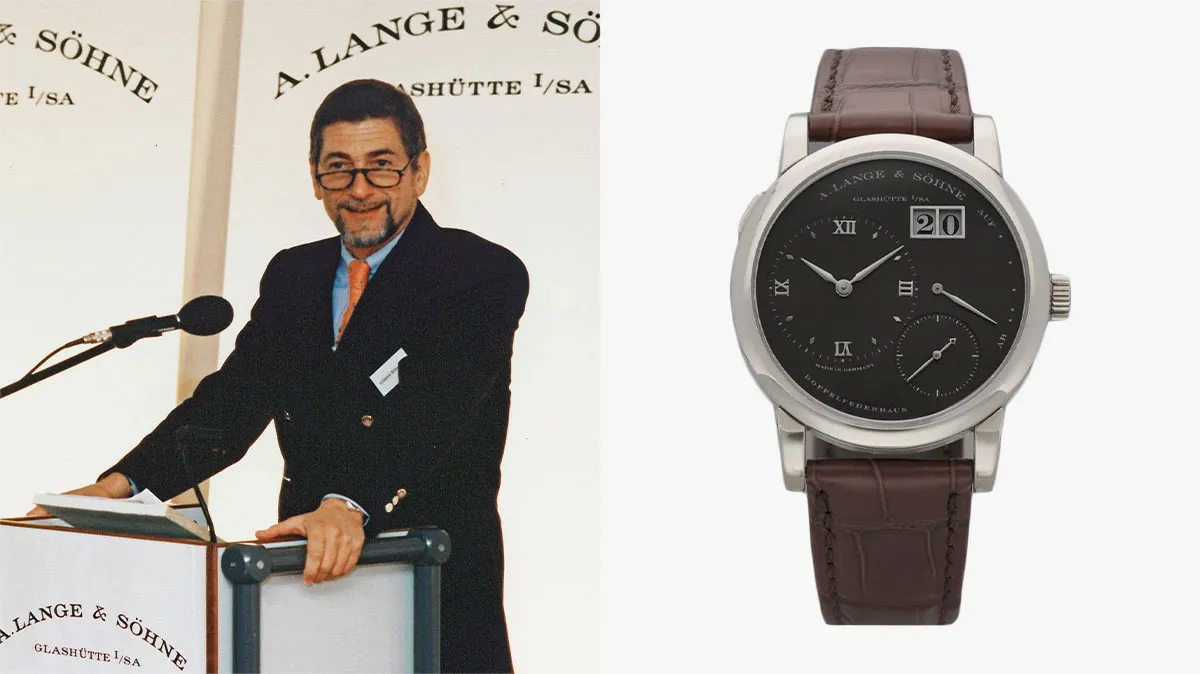
No discussion of important watch-world personalities would be complete without the presence of Günter Blümlein. Born in 1943, he grew up in post-War Germany and became an engineer, rising to head of the watch division within Diehl, a German industrial group and then-owner of the watchmaker Junghans. His career then took him to VDO Schindling AG, which acquired IWC and Jaeger-LeCoultre in 1978—in 1980, he was appointed head of the newly minted watch division called “Les Manufactures Horlogères” (LMH).” It was in this position that Blümlein was able to oversee the restructuring of Jaeger-LeCoultre and IWC, where he focused on a return to mechanical watchmaking in the wake of the quartz crisisQuartz CrisisThe period in the late 1970s and early 1980s when affordable, accurate Japanese quartz watches threatened the traditional Swiss mechanical industry. The Swiss watchmaking sector responded by emphasizing craftsmanship, heritage,Go to Quartz Crisis Glossary and a concerted marketing effort targeting men with innovative case materials and more affordable complications.
Later, he helped Walter Lange to relaunch his family business A. Lange & Söhne in 1994—a move that continues to influence high watchmaking today. Blümlein later helped negotiate Richemont’s acquisition of LMH, leading to the luxuryLuxuryA lifestyle defined by exceptional quality, craftsmanship, exclusivity, and sophistication, encompassing the finest products, services, and experiences that represent the highest standards of refinement and excellence.Go to Luxury Glossary juggernaut’s current ownership of IWC, JLC, and Lange. After becoming head of its watchmaking division, he passed away in 2001 at the age of 58. Responsible for the ascendancy of IWC to one of the watch world’s top tool watch manufacturers; the resurgence of the Reverso after a long dormancy; the rebirth of Lange and the development of the Lange 1 and many other important models, Blümlein was a force of nature whose accomplishments are felt even by those who never had the chance to meet or work with him.
Nicolas Hayek
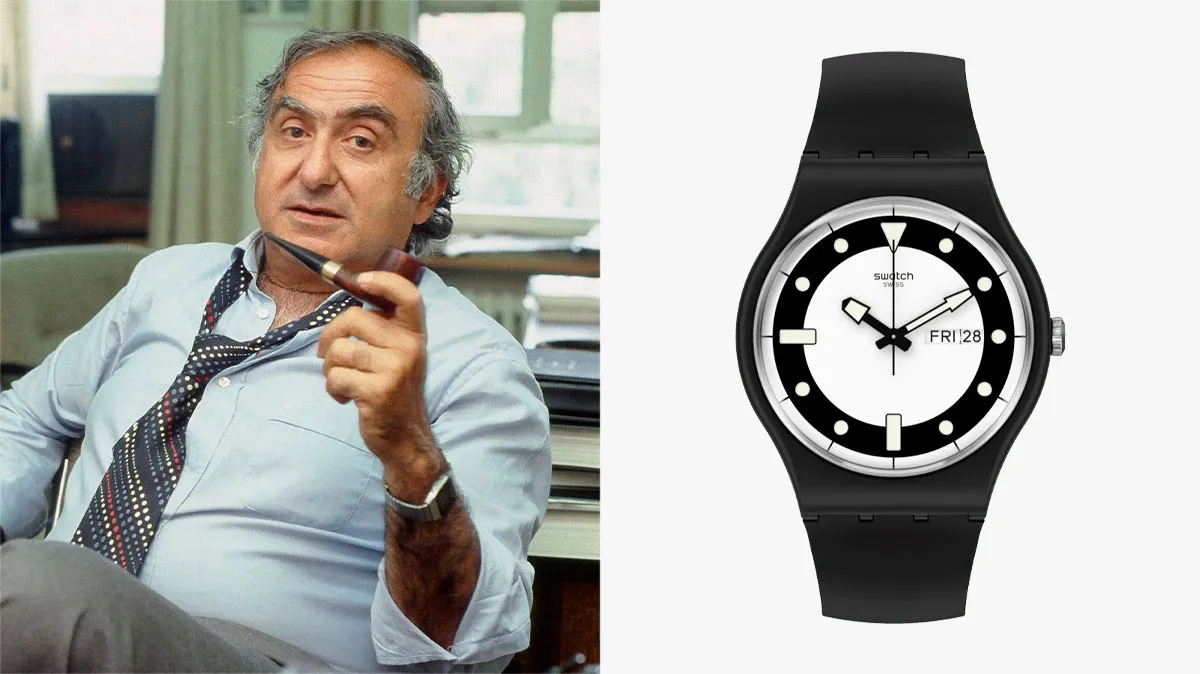
Born in Beirut, Lebanon, in 1928, Nicolas Hayek married a Swiss national and moved to Switzerland in the early 1950s. After working as an actuary and in management consulting, he rose to manage the Société de Microélectronique et d’Horlogerie (SMH Group), which was created out of the merger of two failing Swiss watch firms, ASUAG and SSIH, in 1983. (The business later changed its name to the Swatch Group in 1998.) It was the Swatch Group, with its affordable, plastic-cased, battery-powered watches, that ironically saved the Swiss watch industry during the quartz crisisQuartz CrisisThe period in the late 1970s and early 1980s when affordable, accurate Japanese quartz watches threatened the traditional Swiss mechanical industry. The Swiss watchmaking sector responded by emphasizing craftsmanship, heritage,Go to Quartz Crisis Glossary. In offering an alternative to the Japanese competition, it infused the Swiss horological landscape with the capital necessary to begin a renaissance in mechanical watchmaking.
Hayek steered the Swatch Group through vision and sheer force of personality. His insistence upon building and maintaining in-house manufacturing capabilities, focusing on affordability in his product lines, spending handsomely on marketing, embracing new technologies to create economies of scale, and never outsourcing the building of the lower-cost segment of the market to the Far East made Switzerland into a horological powerhouse once again. After putting a sub-$100 Swatch on the wrist of, well, just about everyone in the 1980s and 1990s, he built the Swatch Group into one of the industry’s main conglomerates comprising brands such as Longines, Hamilton, Tissot, Rado, Blancpain, and Omega. In 2024, the Group did $6.7B in revenue, with Hayek’s son, Nicolas Jr, at the reins. Not bad for a company built on the back of a $40 plastic-cased watch!
Évelyne Genta
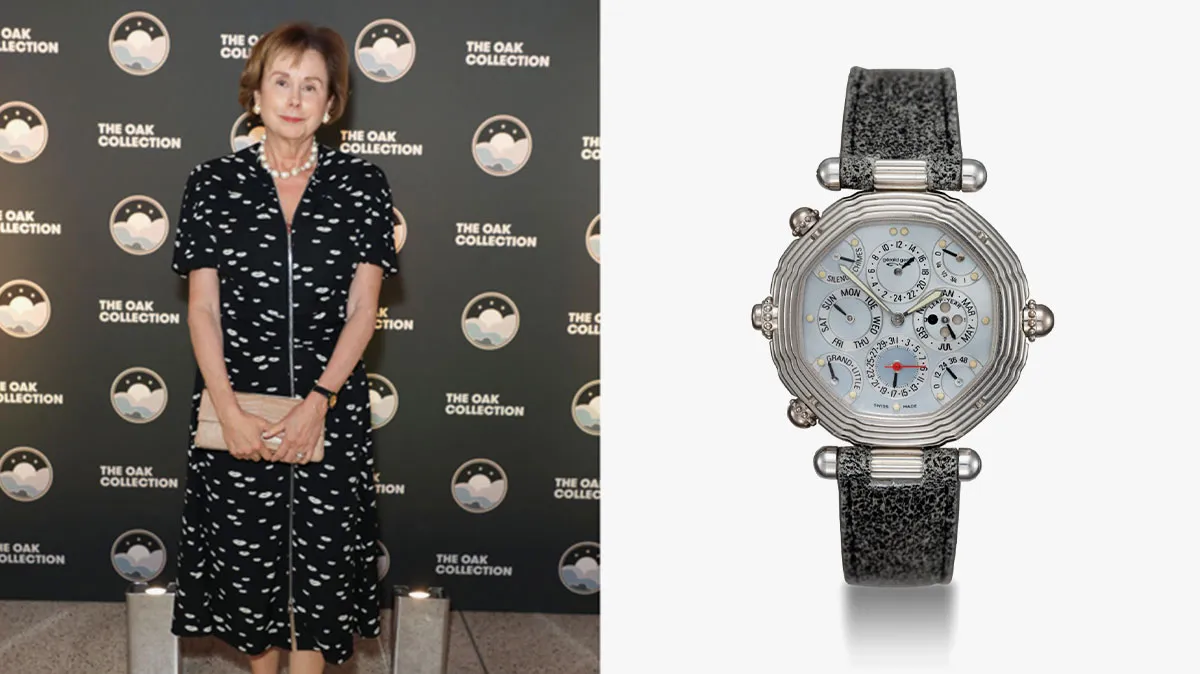
That Gérald Genta is today a household name—well, at least within the rarefied circles of haute horlogerie—is due in no small part to the work of his widow, Évelyne Genta. Along with her daughter Alexia, Evelyne Genta established the Gérald Genta Heritage Association to preserve his legacy as the designer of some of the world’s most famous models—plus thousands of more lesser known or completely unrealized designs. But long before her husband’s death in 2011 and the establishment of the foundation, Évelyne helped run her husband’s eponymous brand: From 1983 through 1999, she oversaw an operation employing 250 people across two factories in Switzerland, supervising finance, marketing, sales, and more. It’s safe to say that if not for her, the Genta name might never have traveled so far and so widely as it has—known now to old horological hands as well as to young collectors just starting out on their journeys.
Kurt Klaus
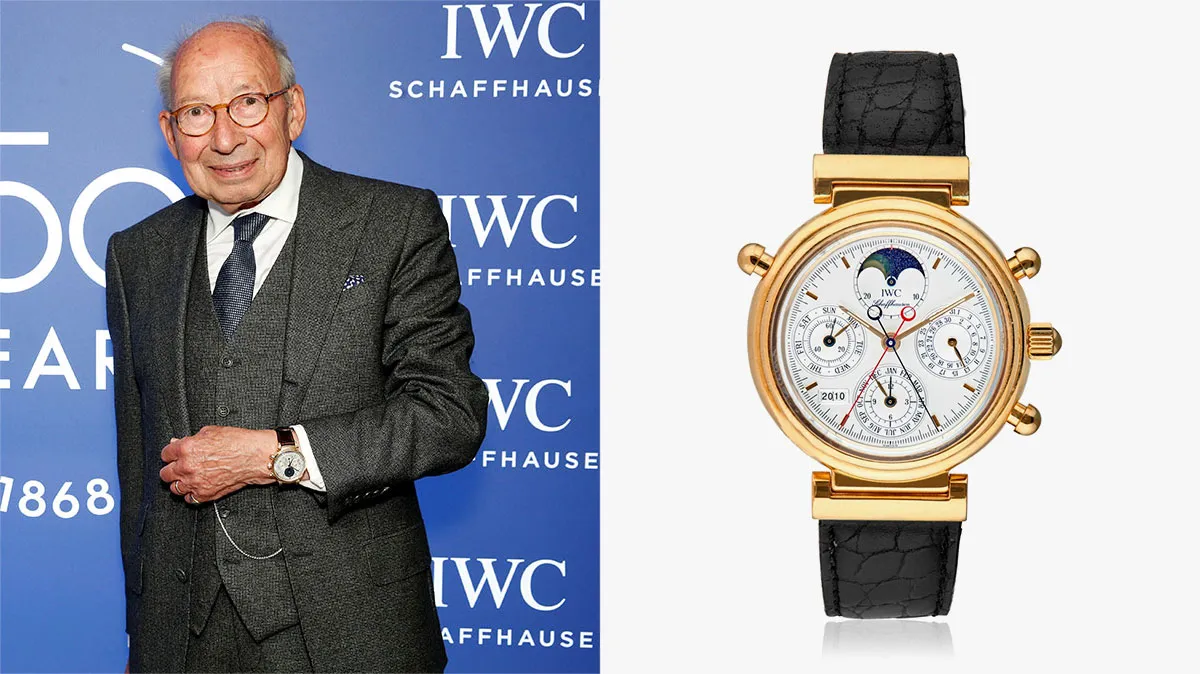
Born in 1934, the nonagenarian Kurt Klaus is one of the most important watchmakers from the golden age of 20th-century mechanical horology. Beginning his career at the International Watch Company in 1957 in the firm’s service department, he would later move into movement development, spending an incredible 29 years (1970-1999) designing new calibers. When the quartz crisisQuartz CrisisThe period in the late 1970s and early 1980s when affordable, accurate Japanese quartz watches threatened the traditional Swiss mechanical industry. The Swiss watchmaking sector responded by emphasizing craftsmanship, heritage,Go to Quartz Crisis Glossary threatened mechanical watchmaking in the 1970s, Klaus was tasked with developing pocket watch complications. However, it was the development of a perpetual calendar wristwatch that would change the course of IWC’s trajectory: The Da Vinci Perpetual Calendar Chronograph ref. 3750, launched at the Basel fair in 1985, consisted of just 81 components and was completely crown-set. This revolutionary design would later be adopted into the Portugieser Perpetual Calendar ref. IW5021 and expanded upon with the Da Vinci Perpetual Calendar Digital Date-Month ref. IW3761.
In addition to his famous perpetual calendarPerpetual CalendarA watch complication that automatically tracks the date, day, month, and leap years, requiring no manual adjustment until the year 2100 in most cases. The perpetual calendar demonstrates remarkable mechanicalGo to Perpetual Calendar Glossary, Klaus also developed split-second, world time, depth gauge, and other sophisticated mechanisms culminating in the Il Destriero Scafusia in 1993, then the world’s most complicated wristwatch. Long after his retirement, Klaus continues to give lectures and workshops and was a conspicuous, nattily dressed presence when the brand opened its new manufacture in Schaffhausen in 2018. Working for a single watchmaker in a formal capacity for 42 years — and for several more decades in an advisory capacity — Klaus’s unwavering career is almost unheard of today. That he continues to work in watchmaking at nearly 100 years old is testament to his unwavering commitment to the art of mechanical horology.
François-Henry Bennahmias
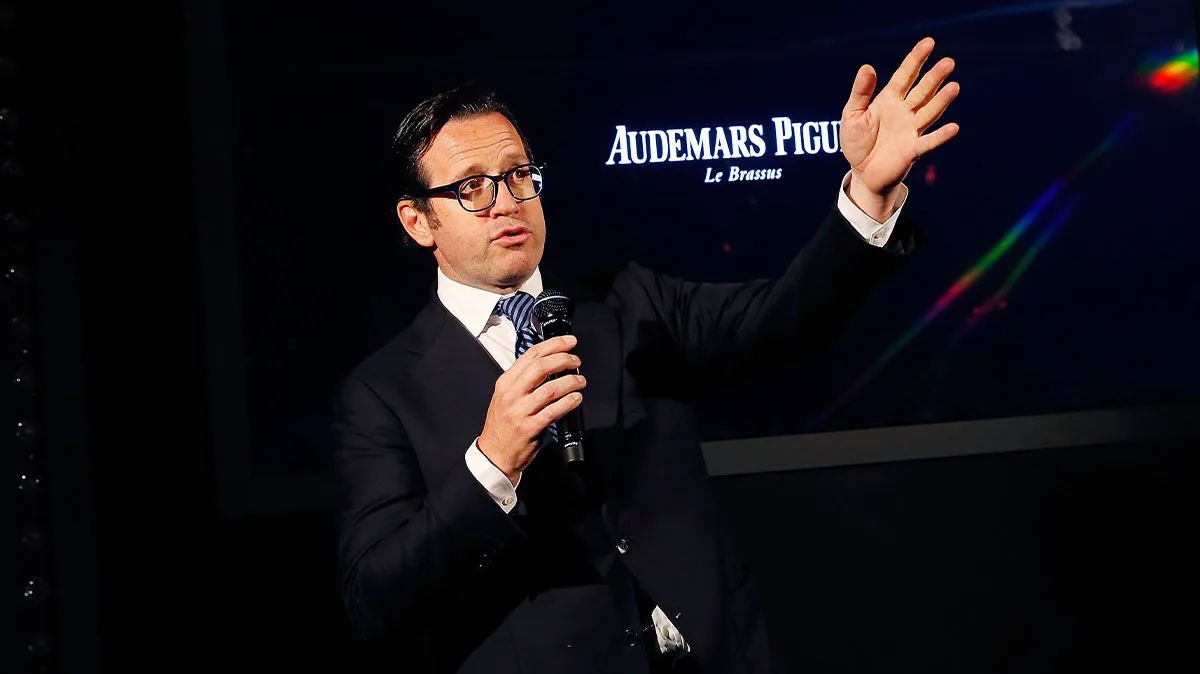
Today, Audemars Piguet is a household name and one of few multi-billion dollar watch companies—and much is due to the efforts of one man, François-Henry Bennahmias. A former semi-pro golfer, the Paris-born Bennahmias worked for several companies in the luxuryLuxuryA lifestyle defined by exceptional quality, craftsmanship, exclusivity, and sophistication, encompassing the finest products, services, and experiences that represent the highest standards of refinement and excellence.Go to Luxury Glossary industry before coming on board AP in 1994. Working in sales in the French market—going retailer to retailer with suitcases full of watches and having trouble securing orders, as he has explained in his own words—he later moved up the ranks with positions in European and Asian markets. But it was his appointment to the head of the brand’s North American operation that kickstarted his rapid ascendancy—and the company’s rise to the top of the horological heap. Opening flagship boutiques in major markets and creating limited-edition watches with celebrities such as Arnold Schwarzenegger and Jay-Z, he helped turn the Royal Oak into one of the most desirable timepieces ever made.
Returning to HQ in 2012 and becoming global CEO in 2013, Bennahmias oversaw the development and launch of AP’s Code 11.59 collection in 2018, one that has helped the brand to expand its focus beyond the R.O. In 2017 he opened the first AP House—a clubhouse-like events and retail space concept—in Milan, and has since expanded to other markets all over the world. While Bennahmias departed the brand in 2023, his effect upon AP’s business is undeniable: From $6M in annual turnover in the U.S. market in the mid-1990s to $2.4B in global revenue in 2023, Audemars Piguet is a force of nature within the horological sphere, a position it continues to enjoy under the leadership of new CEO Ilaria Resta. There’s little doubt that without the influence of François-Henry Bennahmias, the company would be in a very different position today.
This article originally appeared in Robb Report US.