5 Next-Gen Amphibious Aircraft That Will Soon Hit the Skies




A new breed of amphibious aircraft from sustainable seaplanes to gliders is set to take off in the next five years, vying to redefine short-haul coastal and island travel.
The advantages of landing on water have long been recognized since the first powered take-off and landing on a lagoon in Martigues, France, in 1910. In the ensuing decades, floatplanes and flying boats went through a period of rapid development opening up a world of travel exploration. Just nine years after that first successful flight, the long-range Curtiss Model H became the first flying boat to cross the Atlantic Ocean, from Newfoundland to Plymouth, England. In the late 1930s, the Boeing 314 Clipper was so opulent it was nicknamed a “flying ocean liner,” catering to the world’s wealthiest celebrities and diplomats. In World War II, amphibious aircraft were used for reconnaissance, search and rescue operations, and anti-submarine warfare. After that, changes in technology and design were minimal.
Fast forward to 2025. With congested airports, a trend toward net-zero emissions and noise reduction, and the ability to access coastal and remote destinations, amphibious aircraft are now moving into the next generation. They promise impressive cruise speeds, decent ranges and the ability to access waters banned to conventionally powered aircraft. They share boast innovative propulsion, and one even employs ground effect to cruise above the water. They are targeting the growing markets of island resorts and coastal travel in a fresh, sustainable way.
Here are five that could be flying soon.
Regent Viceroy
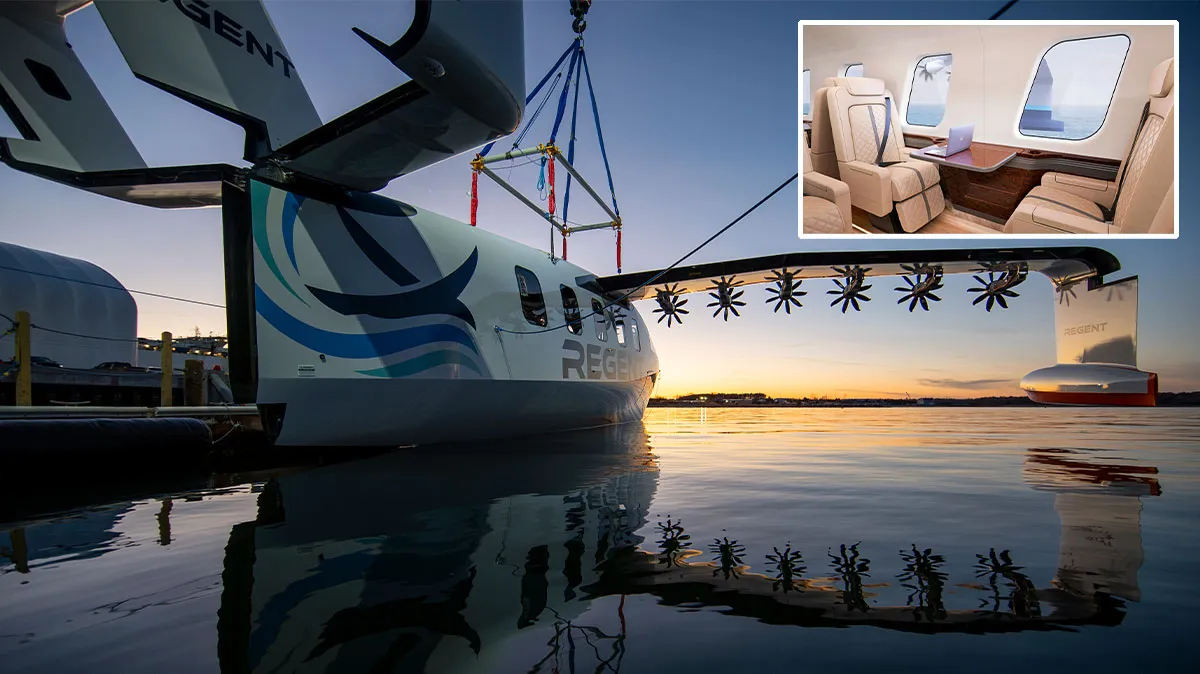
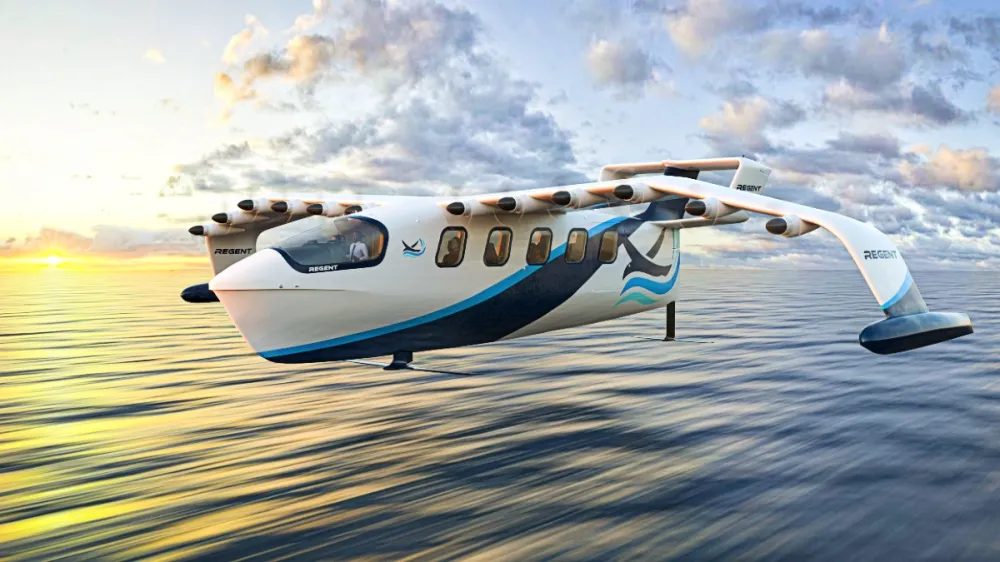
One of the most unusual amphibious designs is from Rhode Island-based Regent, which just completed foil-mode testing of its 12-passenger Viceroy Seaglider. It looks like an aircraft, but operates more like an electric-powered glider. With 12 electric propellers affixed to wings, the Viceroy uses hydrofoils underneath to lift the vessel out of the water, allowing it to ride on a cushion of air above the surface.
This “ground-effect” flight keeps the vessel 10 feet to 30 feet above the water at 180 mph, enjoying a range of 160 nautical miles. On landing, the airfoils retract, and the deep V-shaped hull allows the vessel to maneuver like a boat, useful in more congested waterways.
Regent’s cofounder and CEO Billy Thalheimer tells Robb Report that the aircraft’s three stages of operation allow it to operate in 90 percent of sea-state conditions anywhere in the world.
The Viceroy incorporates an inertial navigation system for precise low-altitude flight, autonomous and semi-autonomous flight, and stability during transport transition phases. The vessel also uses advanced sensor systems for radar, sonar, GPS, and computer vision.
The company envisions multiple use cases, too, including a cushy VIP interior cabin that creates easy access for island-to-island travel compared to other amphibious aircraft The interior will feature a 26-foot-long cabin with six-foot headroom, panoramic windows, Wi-Fi, and executive club seating with plenty of bespoke customization options.
The Seaglider is confined to dock-to-dock and overwater routes, prompting Thalheimer to call it the “fastest boat on the water” with coastal applications that go beyond luxuryLuxuryA lifestyle defined by exceptional quality, craftsmanship, exclusivity, and sophistication, encompassing the finest products, services, and experiences that represent the highest standards of refinement and excellence.Go to Luxury Glossary transport, including defense, medevac, cargo transport, and offshore energy logistics. Regent claims $10 billion in orders. The company will conduct its first tests with people on board later this year. Regent also recently broke ground on its manufacturing facility in Quonset, Rhode Island. Deliveries are slated for 2027.
Jekta PHA-ZE 100
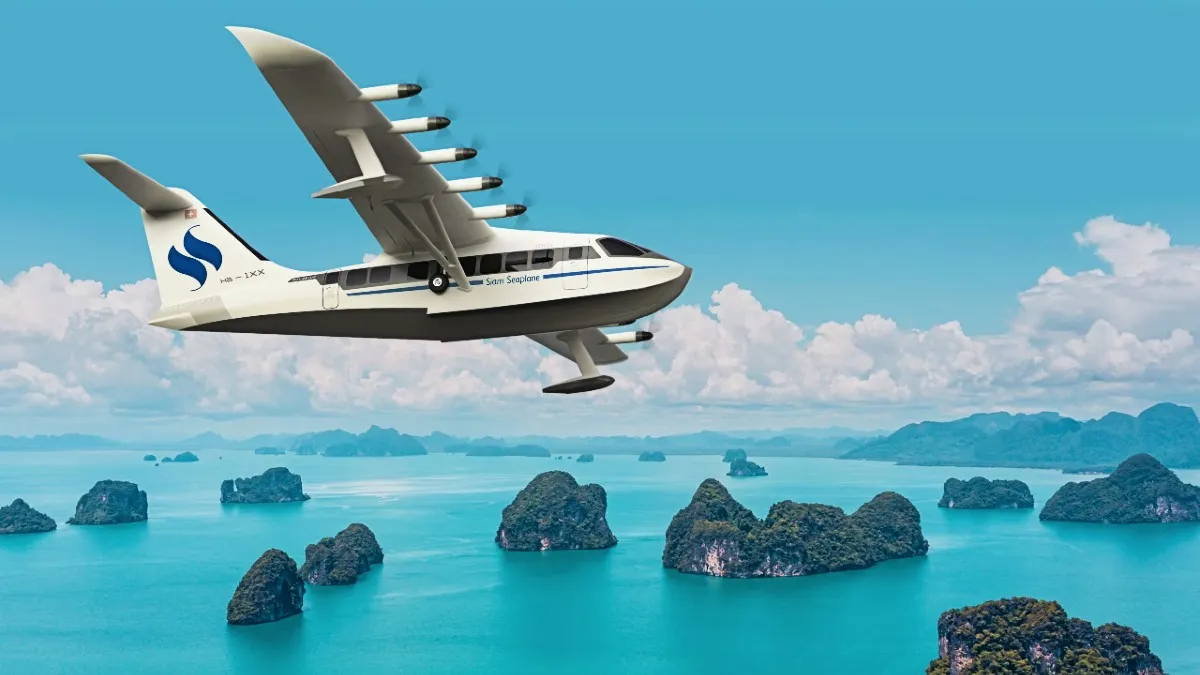
“We are building a flying yacht,” says George Alafinov, CEO of Jekta, about its PHA-ZE 100, a hydrogen-powered amphibious aircraft. The Swiss company recently began flight testing a 1:9 scale prototype to evaluate its aerodynamic and hydrodynamic configurations, projecting a commercial launch by 2030.
This swept-wing aircraft with stabilizing floats can dock or self-beach, but it also has retractable wheeled landing gear for use on runways. It uses 10 three-bladed propellers powered by 200kW electric motors, which gives it a maximum cruise of 155 mph and range of 310 nautical miles, with a 30-minute reserve. The aircraft takes approximately 45 minutes to recharge.
Its VIP model is expected to accommodate six to eight passengers in a club or lounge-style configuration. Reclining seats, panoramic windows, a private lavatory, a cocktail bar, internet connectivity, and cabin control features are all envisioned. Jekta claims advanced commitments of more than $1 billion for the PHA-ZE 100.
Net-zero emissions are one benefit of operating an all-electric and hydrogen-cell powered amphibious aircraft, says Alafinov, while up to 80 percent cost savings is another. The quiet electric engines should pair nicely with the needs of luxuryLuxuryA lifestyle defined by exceptional quality, craftsmanship, exclusivity, and sophistication, encompassing the finest products, services, and experiences that represent the highest standards of refinement and excellence.Go to Luxury Glossary hotels, island resorts, and other environmentally sensitive destinations.
Elfly’s Noemi
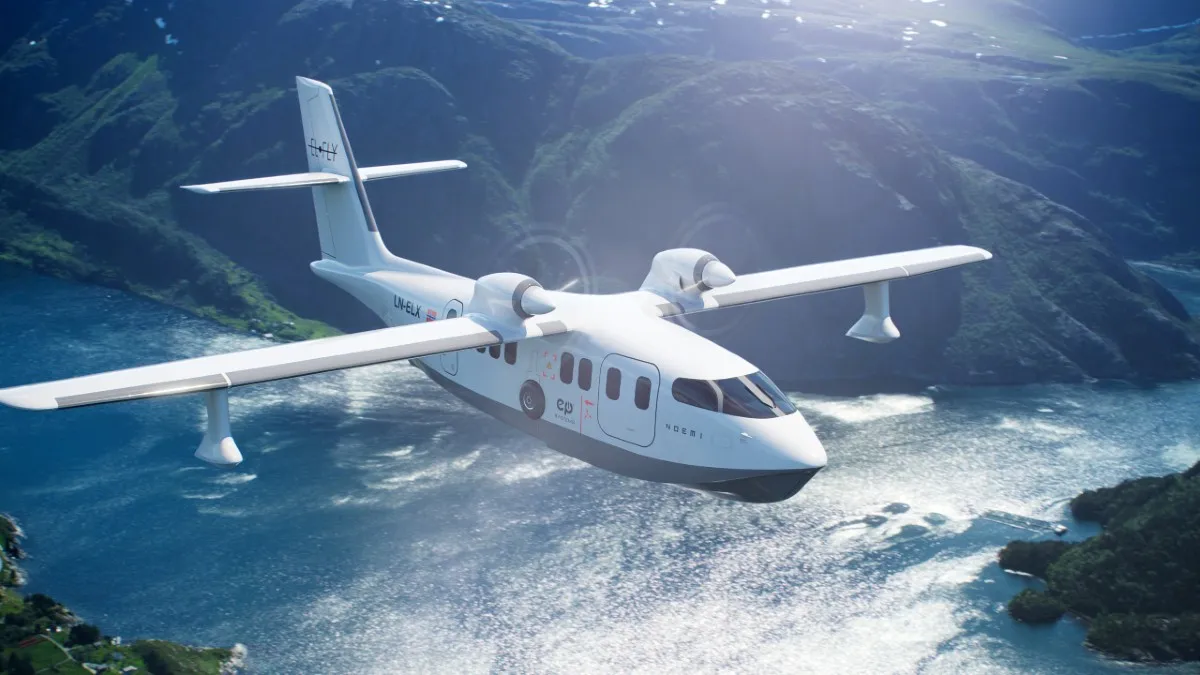
Norwegian start-up Elfly Group hopes to fly the first prototype of Noemi, its short-haul, all-electric amphibious aircraft, by 2027 and then launch it commercially by 2030. The company recently finalized its design of the nine-passenger amphibious aircraft and started building a prototype.
This clean-sheet design incorporates a boat-style hull, ideal for fjords and coastal waters, as an alternative to conventional floats. Its electric propulsion and dual propellers is designed for a top cruise speed of 155 mph and a range of 92 nautical miles. VIP configurations will feature soft seats, large panoramic windows and other amenities.
Mallard Enterprises ME-1A
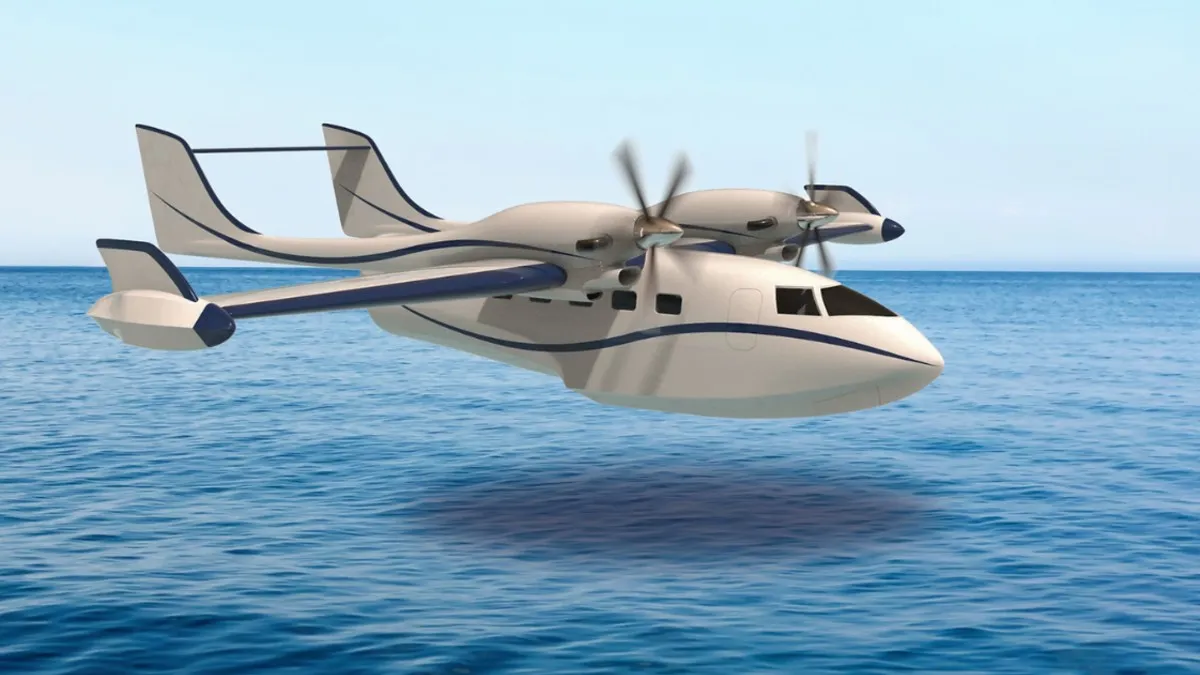
While still in early development, Florida-based Mallard Enterprises is designing a five-blade, twin-propeller aircraft that, if successful, will be the fastest in its category. Mallard’s ME-1A boasts a top cruise speed of 287 mph and a range of 330 nautical miles. Its executive configuration will accommodate nine to 12 passengers, with a forward lavatory and galley. Current designs run on sustainable aviation fuel (SAF), but plans are under way to convert the aircraft to hydrogen-electric power. More than 80 units have been preordered.
Dornier Seastar CD2
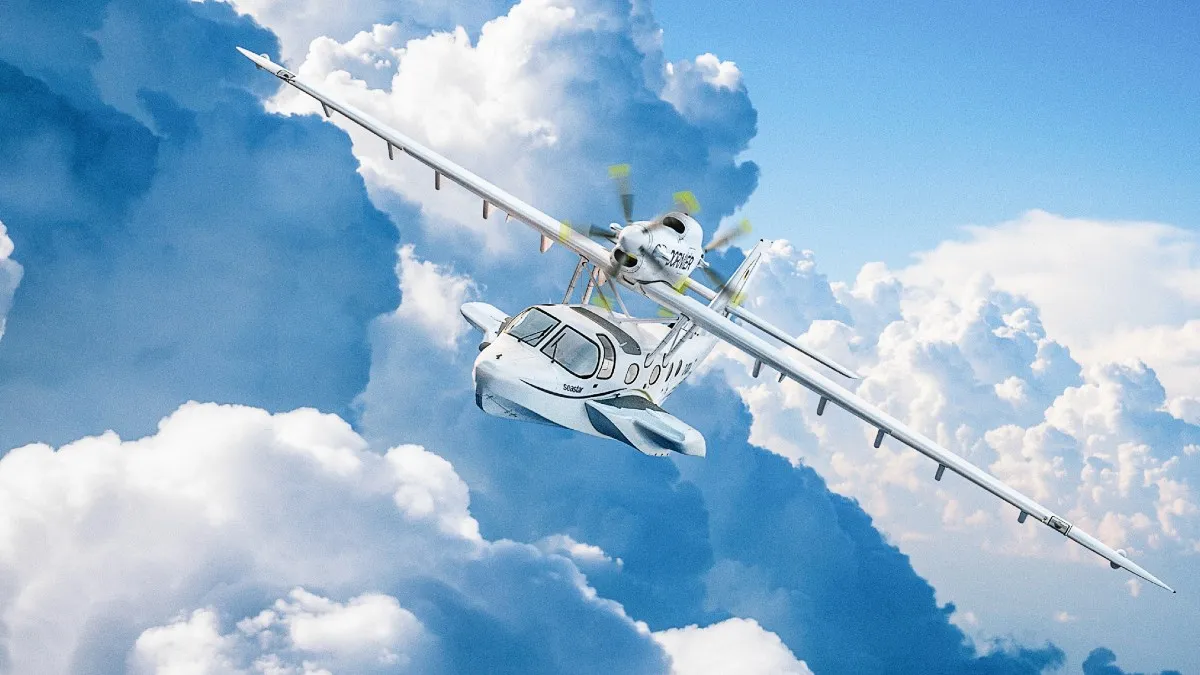
Dornier Seawings plans to certify its Seastar CD2 in Europe sometime this year, after the Germany- and China-based company updated the nine-seat amphibious aircraft that originally launched in the 1980s. The 2025 version includes an all-composite airframe, twin engine configuration, a three-spar composite wing, along with a boat-shaped fuselage that performs like a powerboat on the water, and sponsons for flotation. This amphibious airplane, with a 900-nautical mileNautical MileA unit of distance used at sea and in aviation, equal to 1,852 meters, one minute of latitude. Yachts and aircraft specify their range in nautical miles, so understanding theGo to Nautical Mile Glossary range, is powered by conventional Pratt & Whitney Canada PT-6A-135A engines. It also has a retractable tricycle landing gear for landing on runways. The company told FlightGlobal.com in March that it is focusing on gaining certification and selling its first two aircraft in 2026.
This article originally appeared in Robb Report US.