Miko Calo: All Roads Lead to Home




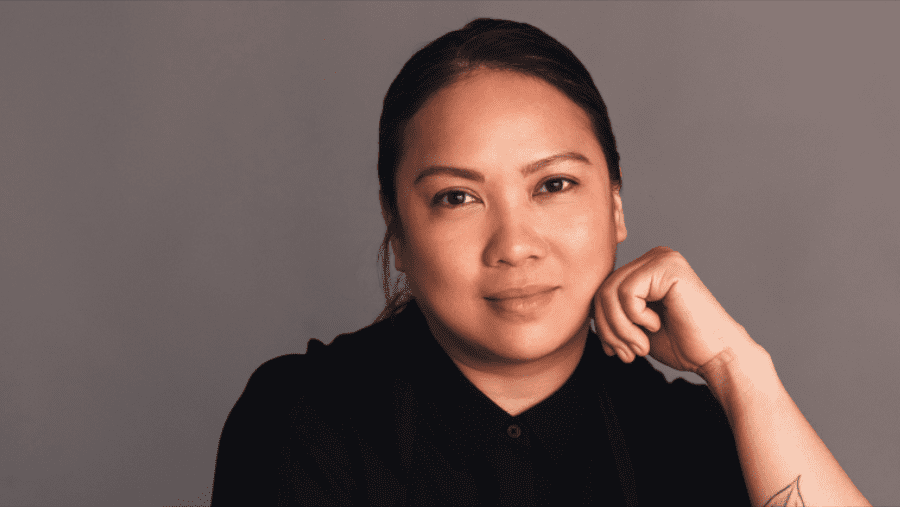
“My cooking is deeply rooted in French technique, but it’s not French food,” describes Miko Calo. “I’m Filipino. I will never be able to see things like a French person does or experience French cuisine like they do because my experience is different; my food is like a story of my personal journey. Cooking like this comes naturally to me. That’s what I’ve always wanted to do, and what I wanted to highlight this time: technique and my identity.”
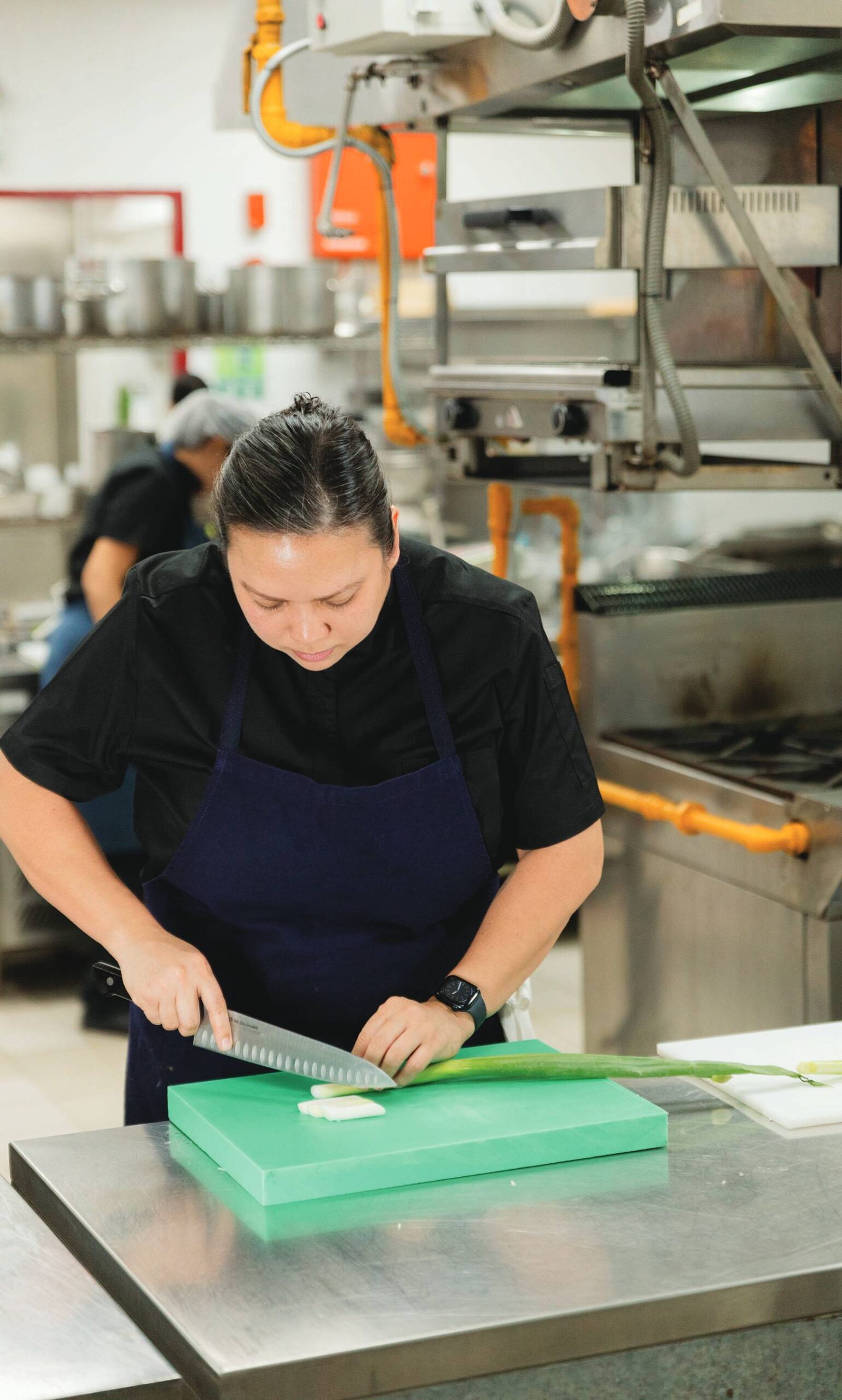
She may be describing her menu at a recent residency in Sage Grill at Makati Shangri-La, Manila, specifically, but this viewpoint is the common thread that has woven through her projects since her tenure at Metronome, a French restaurant in Makati, of which she was an owner, and where she was executive chef for nearly five years since its inception.
“Her previous posting was an avenue to show that she could cook,” says RJ Calo, her cousin and business partner. “Now, she has the opportunity to show what she can cook.”
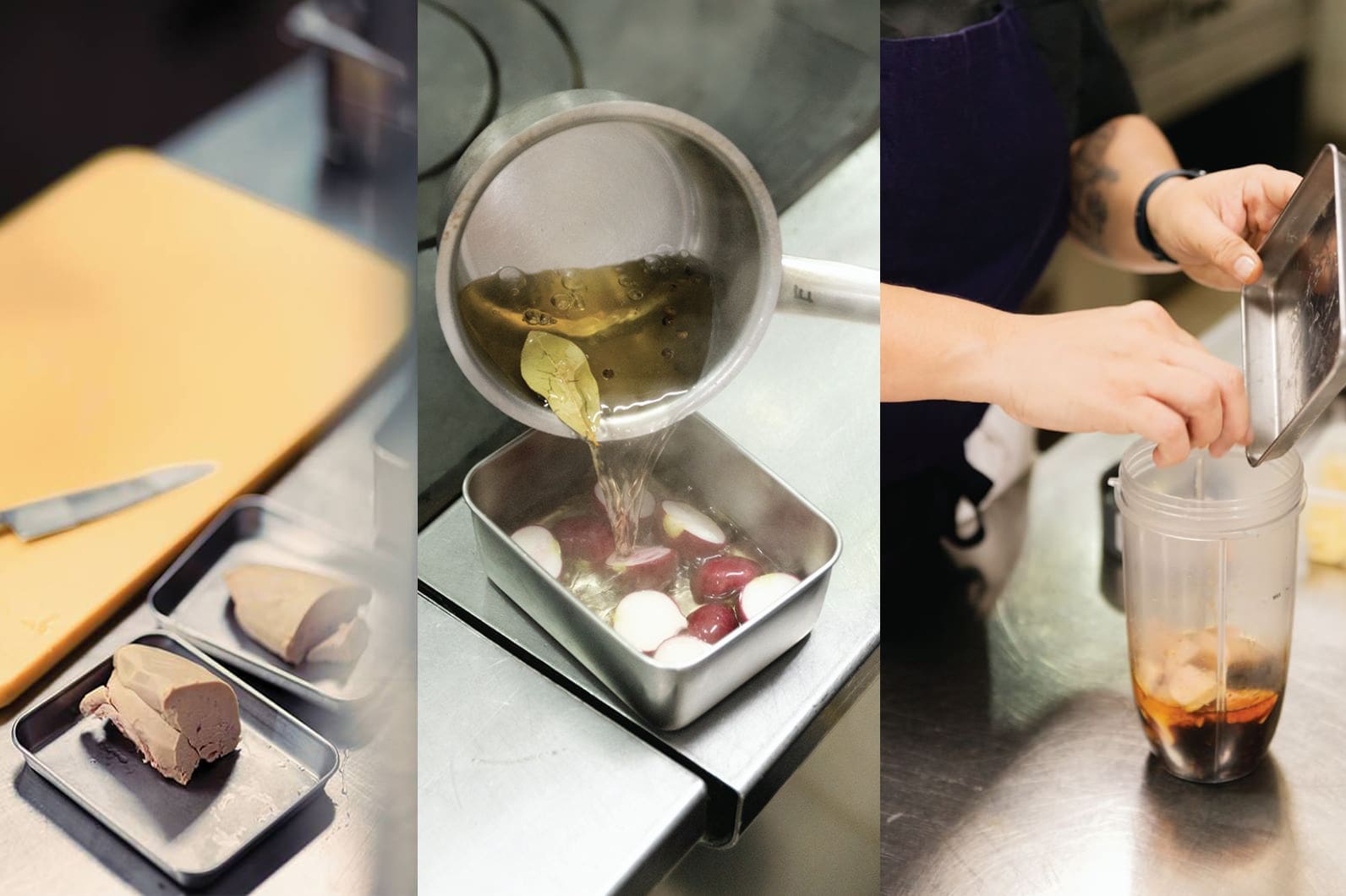
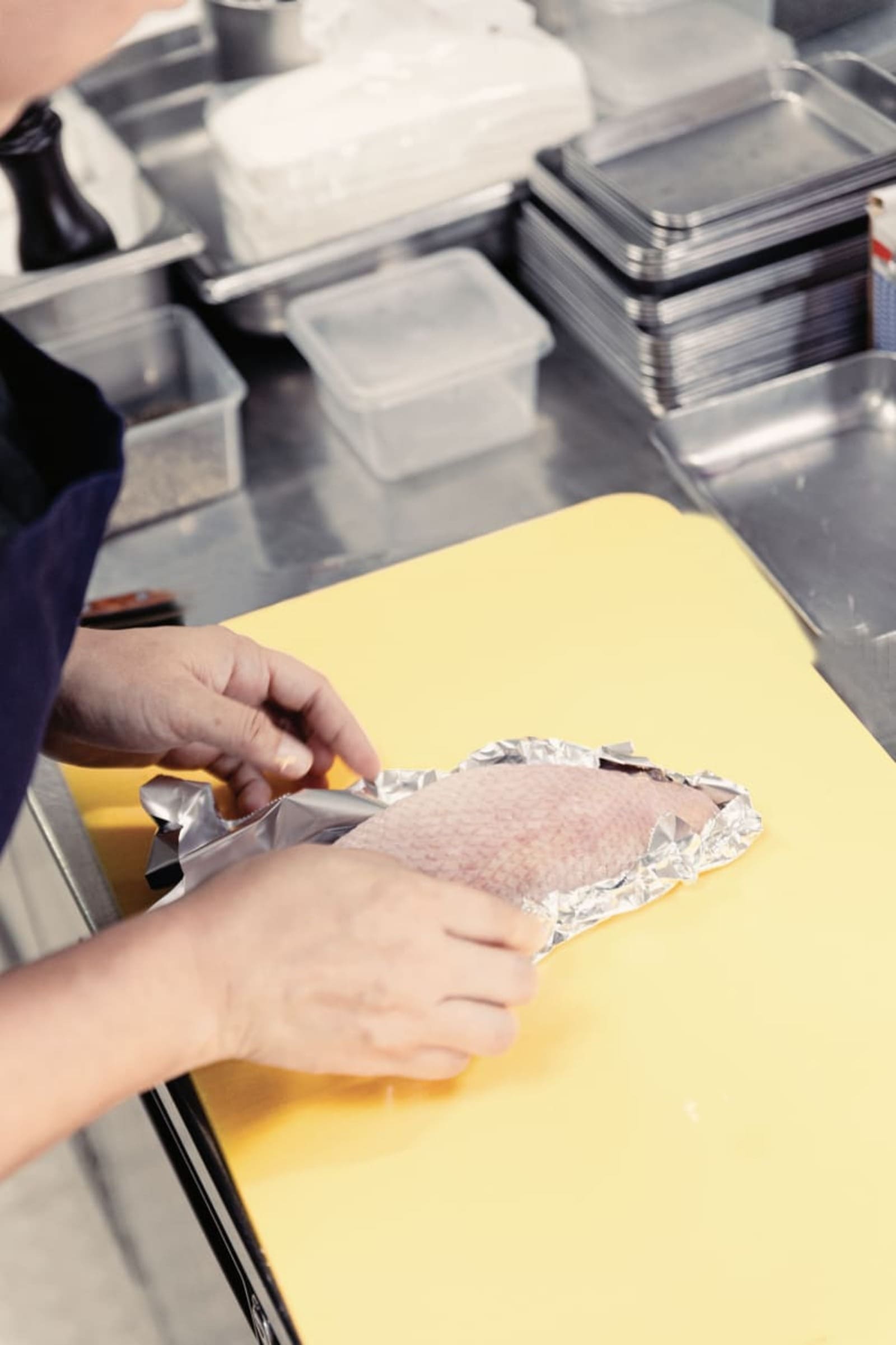
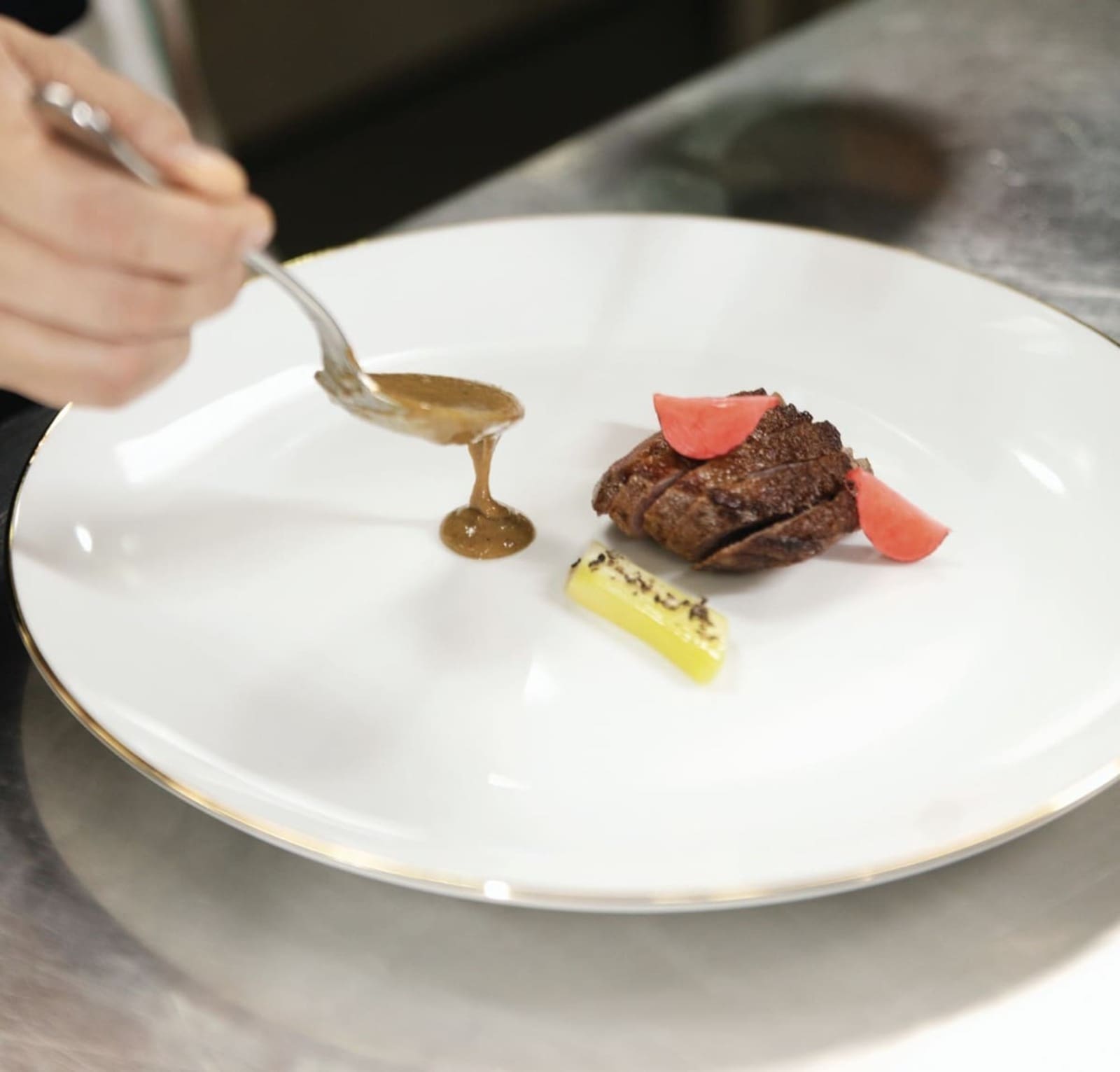
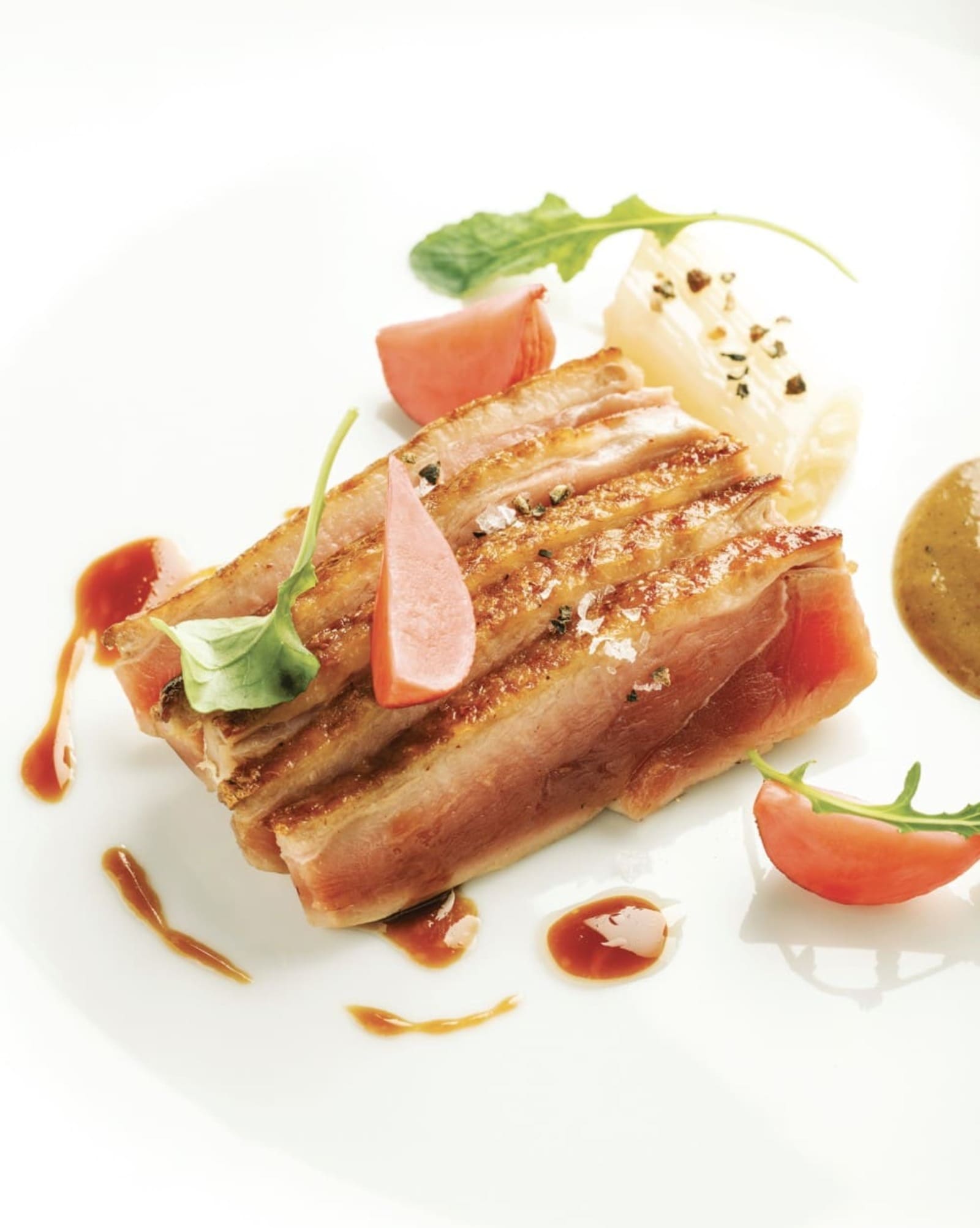
And how. Consider the gastrique that accompanies the duck magret in this story, where lobes of foie gras are smoked to mirror the open-spit flavors in a traditional liver sauce that accompanies lechon (in this case, the style of a lechon from Luzon), resulting in the same flavor profile but undeniably more velvety, balanced, and sublime. While her execution may be more refined, there is something about Calo’s cooking that never dismisses its original iteration as less than hers. It’s not her mission to do it better; she’s too reverential of Filipino cuisine for that. Instead, by deft control of her craft, she brings one back to that repository of every relished, guilty, glorious pleasure and unapologetic abandon they’ve ever experienced eating lechon—one can tell she knows very well what that tastes like, growing up in Pampanga—and yet, on the plate: an immaculate magret, garnished with radishes pickled in cane vinegar from Arayat, and a tempered dollop of sauce. With a sauce that good, does one miss the lechon on that plate? Not at all: the duck is incredible; the narrative of its traditional perch in French cuisine, reframed.
It’s a skill honed by rigorous training from years at celebrated local fine dining restaurants, at the École Grégoire-Ferrandi, and seven years plus change in the restaurants of Joël Robuchon, whose roster of restaurants still holds the most Michelin stars of any chef in history. But as in any artistic arc, it’s the great ones who, after years of rudimentary lessons in the craft, dare to color outside the lines. For Calo, this means honoring local ingredients and traditional recipes fundamentally, but also claiming ownership for her own singular experience as a Filipina who loves Filipino food the way that she does and who cooks the way she does. For her menu for Sage, her story continues expressing itself in a bordelaise sauce with tablea for braised beef cheeks; a kamias glaze for Brittany pigeon; and a vinaigrette of coconut and tabon-tabon (a wild fruit found in Northern Mindanao) for oysters, among other inspired dishes.
She draws from a vast reservoir of memory from a childhood rooted in Butuan, to growing up in Arayat in Pampanga, to becoming an adult and professional curious about food. “When I travel, I go to the markets and visit eateries from the starred to hole-in-the-wall. I don’t even think about sites to see,” she laughs, recalling a time when she visited New York and in her eyeline saw a tiny Statue of Liberty from miles away–which was enough, as she was more interested in the directions to the restaurant where she was headed.
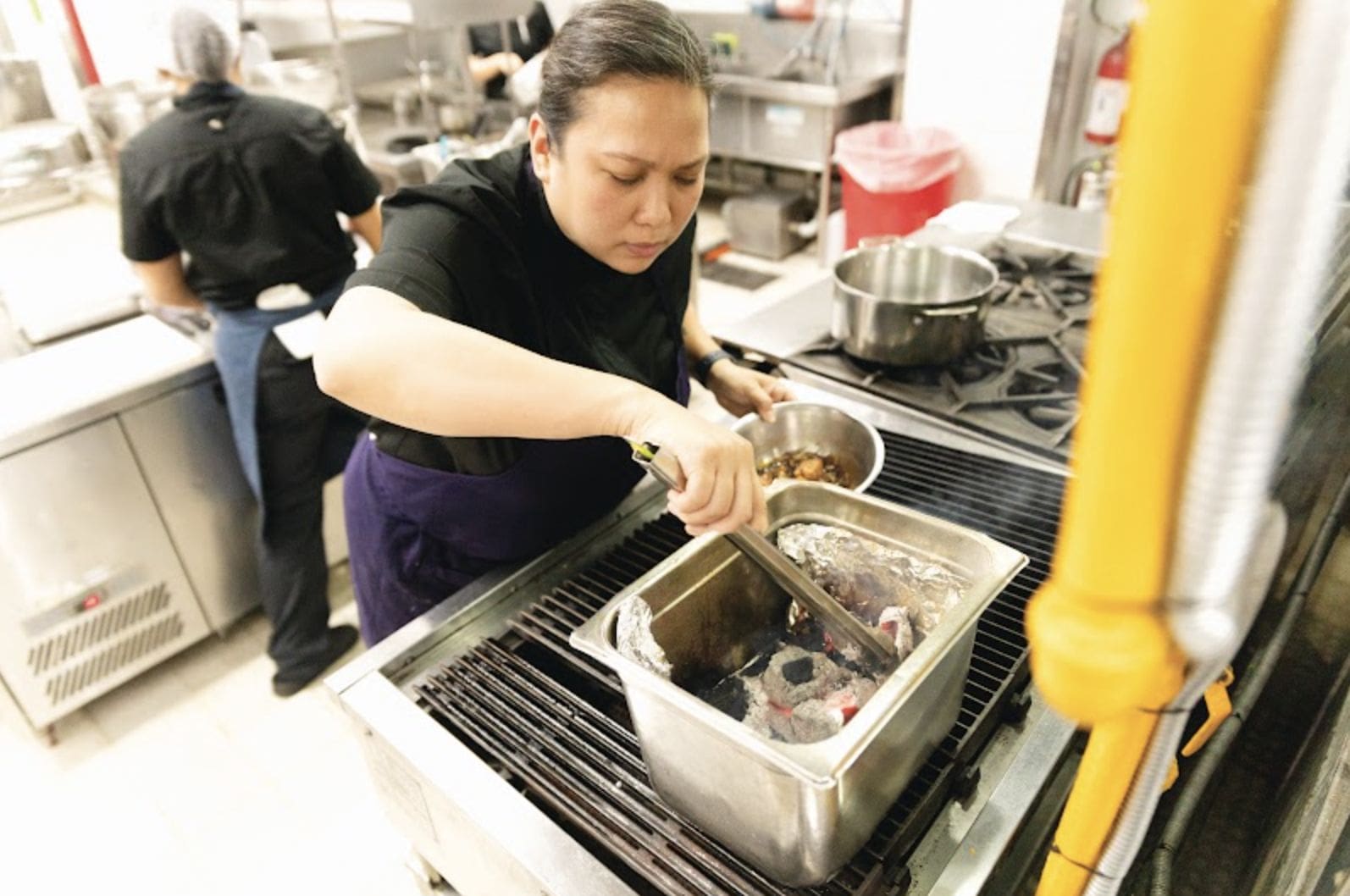
Explaining her creative process, she says, “When I think about food or ingredients, I can taste it and smell it; I think, ‘What if we put this and this together?’” Calo gestures as though she has just conjured the very ingredients out of thin air, giving it a taste. “Or, there are times when I want to do something with a certain ingredient,” she continues. “I’m working with banana hearts, but it’s not quite where I want it yet. I want to try a small red durian from Palawan. And I have this obsession with upo [bottle gourd], because it’s such a non-flavor! Imagine if you can do something amazing with it?”
Calo wishes that the Philippines be considered a tourist destination for reasons beyond just our pristine beaches. “I’d like it to be known as an interesting dining destination. There are very interesting Filipino chefs here doing amazing things. The diaspora and the younger generation are really pushing Filipino cuisine out of Filipino delis and communities, opening restaurants,” she says. “It’s not about just [presenting] bagoong foam or something–it can be tapsilog, or ube pan de sal– presenting Filipino food the way it is, unapologetically.”
As she prepares for dinner service, her ease and dedication are palpable. “What I love about my profession is the discipline and the rigorous schedule,” she says. She admits to being disorganized outside of the kitchen, but in it, everything has its place, the way they’re supposed to be, and the way she wants them to be. “Everything just makes sense. That’s where I find my center,” she says. “I’m not looking for a sense of fulfillment anywhere else because I’m already so fulfilled in doing what I absolutely love. I cannot imagine doing anything other than this.”
This article originally appeared in Robb Report Philippines’ Premiere Issue.